
Sioux Falls and Brookings on one side of the state, Rapid City on the other, with Aberdeen, Watertown, Mitchell and Yankton filling in between — and for an equipment contractor here the two obligations that really run statewide are the dig law and the construction stormwater permit, because South Dakota sets no competency standard for general contracting at all.
Because the rules that reach a machine differ by machine, we give each one its own South Dakota page rather than pretending a single state page could cover all five honestly. Choose the machine you run and the page will take the South Dakota specifics from there.
Choose your machine
-
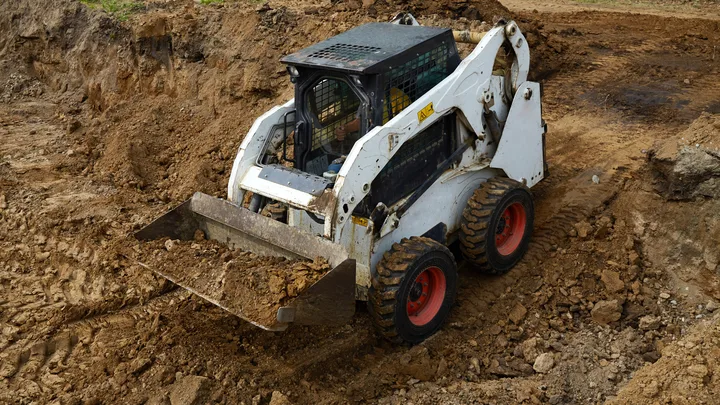
Skid Steer insurance in South Dakota
Untitled equipment, a serial number, and a financing statement on file
-
Excavator insurance in South Dakota
The clock starts the following morning, not at the moment you call
-
Backhoe insurance in South Dakota
An administrative rule puts it outside chapters 32-3 and 32-5 entirely
-
Forklift insurance in South Dakota
The federal standard applied with no state program layered over it
-
Dozer insurance in South Dakota
SDR100000, and the point at which the DANR permit starts to bind
Running something else? We also write trenchers, motor graders, articulated haulers, track loaders, compactors, pile drivers and directional drills — see all equipment we cover.
Who licenses South Dakota equipment contractors
South Dakota has no statewide general-contractor license; a person contracting for construction must hold a contractor’s excise tax license from the Department of Revenue, and only specialty trades (electrical, plumbing) are separately licensed.
A revenue registration is not a statement about competence, so nothing in it follows a machine onto a job — the obligations that do are statutory, and each of the per-machine pages above opens on the one that applies to it.
How coverage is placed
Every machine above sits on the same core lines, and only the first is a condition of writing you: the equipment floater for the machines you own, rented and leased equipment for the ones you do not, general liability for damage the work does to others, commercial auto for the trucks and trailers, and workers compensation for the crews. We place them monoline — no package required.
Primary sources
We do not link a South Dakota licensing document here. The pages beneath this one carry the statute, permit and safety-authority sources for the rules that actually reach each machine.
The statute, permit and safety-authority sources behind each machine sit on that machine’s South Dakota page above, where the rule actually applies.
South Dakota equipment insurance FAQs
Are you able to write equipment for contractors throughout South Dakota?
Yes — Equipment Guard Insurance places heavy equipment and contractors equipment schedules across the state, east river through Sioux Falls, Brookings, Watertown, Aberdeen, Mitchell and Yankton and west river through Rapid City. The machines are written monoline, so the schedule stands on its own rather than inside a package.
What machines will you schedule in South Dakota?
Each of the five graded machines has a South Dakota page of its own: skid steers, excavators from mini through full size, backhoes, rough-terrain forklifts and telehandlers, and dozers. The same schedule also carries trenchers, motor graders, articulated haulers, track loaders, compactors, pile drivers and directional drills.
Is the South Dakota excise tax license a contractor license?
No, and the distinction matters. South Dakota sets no statewide general-contractor competency standard — no exam, no classes, no board. What a person contracting for construction must hold is an excise tax license from the Department of Revenue, which is a revenue registration rather than proof of qualification. Only specialty trades such as electrical and plumbing are separately licensed.
Why does each machine get its own South Dakota page?
Because with no competency regime to organize around, the meaningful rules are the ones attached to individual machines — and they diverge sharply. A skid steer raises a lien question, an excavator answers to the one-call statute, a backhoe to an administrative definition, a forklift to federal safety standards, and a dozer to a state discharge permit. Five separate answers do not compress into one page.
How far ahead does a South Dakota dig notice have to go in?
At least forty-eight hours — two working days — before excavation, under S.D. Codified Laws § 49-7A-5. The forty-eight hours begin at 12:01 a.m. on the following day, and Saturdays, Sundays and state legal holidays are excluded, so a Friday afternoon call buys less time than it appears to. Notice goes to the South Dakota One Call center. The excavator page follows it through.
Do my other policies have to move to insure the equipment?
They do not. Equipment is the only line we need to touch. A general liability or business policy already in force stays where it is, and the schedule is placed alongside it — writing the machines by themselves is exactly what we are set up to do.