
Almost everything about running an excavator in Wyoming is stretched. The jobs are longer, the hauls are longer, the season is shorter, and the distance between a problem and someone who can fix it is measured in hours. A loss that would be an afternoon somewhere else is a week here.
This page covers what that stretch does: a dig notice that has to be renewed while the work is still going on, an underground picture dominated by energy infrastructure rather than city utilities, and a machine whose downtime costs more than its damage. For the excavator itself — reach and swing, undercarriage, attachments, the things that are true in any state — see the excavator insurance pillar.
What excavator insurance costs in Wyoming
A page that quoted a Wyoming excavator would be inventing the answer. The rating conversation starts with what the machine is doing and where: how much of your year is energy-support work versus municipal or commercial site, how far from a yard the typical job sits, how deep the cuts go, and whether you work beside high-pressure facilities regularly or rarely. The unit follows — its size, its age, the attachments on the schedule, where it winters — and so does your own record. Two identical excavators, one on a basin gathering job and one building pad inside a town, are not comparable exposures however similar the paperwork looks.
Wyoming excavator regulations: dig notice and the one-call duty
Projects lasting more than 14 business days require renewed notice each succeeding 14-business-day period; operators must respond within two full business days.
The notice duty is set out at W.S. 37-12-302(c), which we name without linking: the address we hold for it resolves to the legislature’s own front door rather than to the section, and this page links only documents it has opened and read. The structural feature worth understanding is that it repeats. A notice covers a defined stretch of work; a project still running at the end of that stretch needs a fresh one for each period that follows, while operators carry their own business-day obligation to respond. On the long linear work this state specializes in, that turns the dig notice from a single act at mobilization into a standing item on the schedule — and the crew that inherits the job in week six is the one most likely to assume it was handled. The other half of the picture is unchanged from anywhere: marks are approximate positions for facilities the participating operators own, they are not a survey, they do not account for old easements or lines nobody has records for, and they leave the entire consequence of a strike with the contractor who made the cut. Out on open ground, where a single line can serve an entire field or a whole community, that consequence has a very long tail.
Common excavator risks in Wyoming
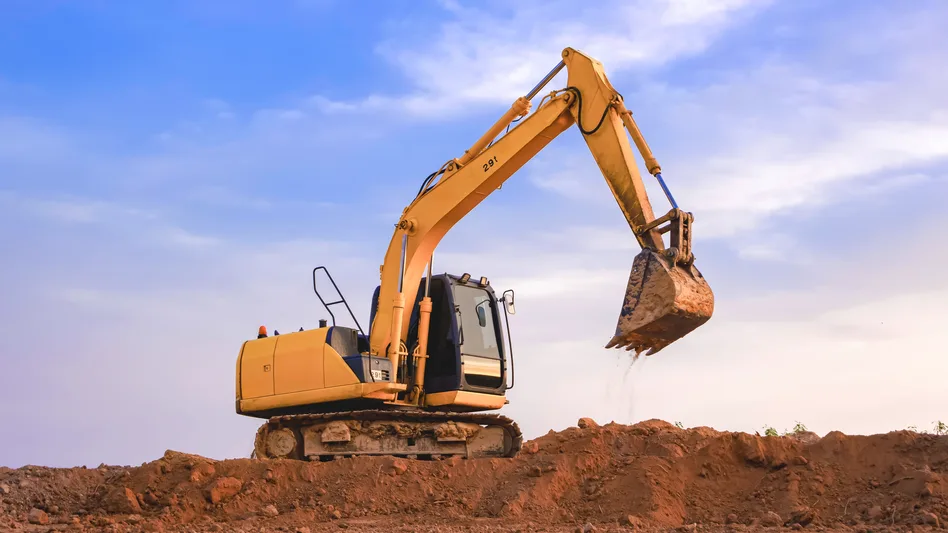
The strike is still the loss that matters most, but here it arrives differently. Facilities are sparse and consequential rather than dense and ordinary, so the exposure is not a nicked service to one building — it is a transmission or gathering line whose failure reaches far beyond the site, in a place where the responder is not nearby. Everything downstream of the event is then lengthened by distance: the site stops, the crew stays put because sending them home is a two-day round trip, and the parts and the recovery equipment arrive when the road allows. Alongside that, the environment works on the machine. Wind is relentless and moves both material and anything not tied down; the frost season is long and compresses the working year at both ends; elevation and cold are hard on hydraulics and starting systems; and machines left on remote sites between rotations sit unwatched in country where nobody is passing by.
Common Wyoming excavator claims we see
- Strike on an energy facility in open country. Low probability per foot of trench, very high consequence when it happens, and slow to resolve at distance.
- Work performed on a lapsed renewal. A long job whose notice period ran out mid-stream while the crew that inherited it assumed otherwise.
- Extended downtime after ordinary damage. The same broken component that is a day elsewhere becomes a week when the machine is hours from a dealer.
- Loss on a remote unattended site. Theft, vandalism or weather damage found at the start of the next rotation rather than the next morning.
- Winter and transport losses. Cold-start damage, frozen ground work, and hauls over long distances and unimproved access.
Why Wyoming excavator owners choose Equipment Guard Insurance
Remote work is where a bundled placement fails quietly. The schedule looks correct, the values look reasonable, and nobody has asked what happens when the machine is four hours from anything and the site stops. Writing equipment on its own lets us start there — how far out you work, how long the jobs run, what the notice cycle looks like on a project that lasts months, and how much of your exposure sits downstream of a cut rather than in the iron. The machine and that exposure then go to markets, named on our homepage, that will underwrite excavation and remote operation on their merits, without any requirement to move liability or comp you already carry.
Major Wyoming excavator markets
- Cheyenne. The most conventional urban and institutional excavation in the state, with genuine utility congestion and steady public work.
- Casper. A service and staging base for basin work, so machines leave from here and spend their weeks a long way out.
- Gillette. Mine and energy-support ground where access road, pad and pipeline work dominate and the buried facilities are industrial.
- Rock Springs. South-western basin operations across long distances, with wind, elevation and access that shape every mobilization.
- Laramie. University and highway-corridor work at altitude, with a short season and hard frost conditions at both ends of it.
- Sheridan. Northern ranch, municipal and resort-adjacent development, where jobs are dispersed and approaches are long.
Related
- Excavator insurance — the machine physics that hold in every state.
- Skid Steer insurance in Wyoming — the machine most likely to disappear from an unattended yard between rotations.
- All equipment insurance in Wyoming — the state hub.
- Equipment floater · Rented & leased equipment
Primary sources
- Wyoming Statutes Title 37 (Public Utilities) — W.S. 37-12-302, Notices; exceptions; penalty — notification center (One-Call of Wyoming / Wyoming 811) (dig notice and one-call)
- Licensing - Electrical Safety, Wyoming State Fire Marshal's Office — Local city/county governments (general contractors); Wyoming Department of Fire Prevention and Electrical Safety (electricians) (contractor licensing)
Wyoming excavator insurance FAQs
Does one notice carry a Wyoming job from start to finish?
Not on the work this state is full of. The notice covers a defined period, and a project still running when that period ends needs the call made again for each successive stretch. On a pipeline tie-in, a mine access road or a long utility run that is not a formality — it is a recurring obligation that has to live in the schedule, because the person who made the original call is often no longer the person on the machine six weeks later.
How much lead time does the notice itself need?
A couple of full business days at minimum, with an outer limit measured in business weeks rather than months, so the band is narrower than in much of the country. Business days do most of the damage to a plan: mobilizing a crew and a float to a remote site is already a multi-day exercise, and a holiday in the middle of the count moves the earliest legal start further than anyone allowed for.
What is actually buried outside a Wyoming town?
Frequently not municipal distribution. Away from the settled corridors, a large part of what runs under open country is energy infrastructure — gathering systems, produced-water lines, transmission and the electrical that serves them — laid across ranch and federal ground over many decades and under a mix of easements. The density is low and the consequence is high: you can dig for days without meeting anything, and the one thing you do meet may be a high-pressure line serving a whole field.
Why does distance matter so much to how this machine is insured?
Because every recovery step is longer. A damaged excavator two hours from the nearest town is not a service call, it is a logistics exercise; a strike that stops a site means a crew idled in lodging rather than sent home; a part that would arrive same-day elsewhere arrives when it arrives. The physical damage may be identical to an urban loss while the time and the standing costs around it are not, and that gap is a large part of what a well-arranged equipment placement is actually buying.
Who licenses a heavy-equipment contractor here?
The state does not, for general contracting. Licensing sits with individual cities and counties, so a firm working several basins can be dealing with several sets of local requirements for what is functionally one operation, while electrical work is handled at state level. The practical effect is that an owner or general contractor vetting you falls back on your record and your certificates, which puts more weight on those documents than a licensed state would.
Can the machine be scheduled on its own?
Yes. Equipment Guard Insurance places equipment monoline in Wyoming, so the excavator and its attachments go on their own schedule and the underground exposure gets addressed with them, leaving the liability and comp you already carry exactly as they are.