
On a Rhode Island site the telehandler is often the only way material gets above the ground floor. A crane is out of the question on a lot this size, so the machine that reaches is the machine that does everything — and it does it with a public sidewalk on one side and somebody else’s building on the other.
The state fact worth knowing is a mismatch. Rhode Island tracks its contractors more thoroughly than almost anywhere in the region and regulates their safety not at all. For what the machine does regardless of jurisdiction — the load chart, what reach costs in capacity, ground bearing, attachments — see the forklift insurance pillar.
What forklift insurance costs in Rhode Island
A published rate for this class would be a number with no relationship to the thing being insured. In Rhode Island the real inputs are how many operators are qualified on the specific machine and how well that is evidenced, whether the unit is a fixed-mast truck or a telescopic machine working at reach, how much of the work is on constrained urban lots against occupied buildings, the attachments carried, the proportion of jobs performed out of state, and a loss record read for injury and third-party damage before machine damage. Site geometry moves the answer here more than machine value does.
Rhode Island forklift regulations: who enforces operator safety
Rhode Island is under federal OSHA for private-sector employers, so the powered-industrial-truck operator training and evaluation requirements are the federal standard applied directly.
Set that beside what the state does require and the shape of this place becomes clear. Every general contractor and every subcontractor building or repairing a structure has to register with the Contractors’ Registration and Licensing Board — mandatory, statewide, with no size threshold to hide beneath. In practice the state holds a more complete picture of who is building here than most states manage, and none of that picture is a safety file. The board registers you; a federal compliance officer investigates you; the two do not meet. The regional version of the same confusion is worse. Both neighboring states operate approved plans, which is true and misleading in the same breath, because our verified data records each of those plans as covering only state and local government employees. A private crew running a telehandler in either one remains under federal OSHA. So a contractor working all three states in a single month is under one standard the whole time while holding three different registration obligations — precisely the inverse of what the headline facts suggest. Getting that backwards is the most likely compliance error in this corner of the country, and it costs nothing to get right.
Common forklift risks in Rhode Island
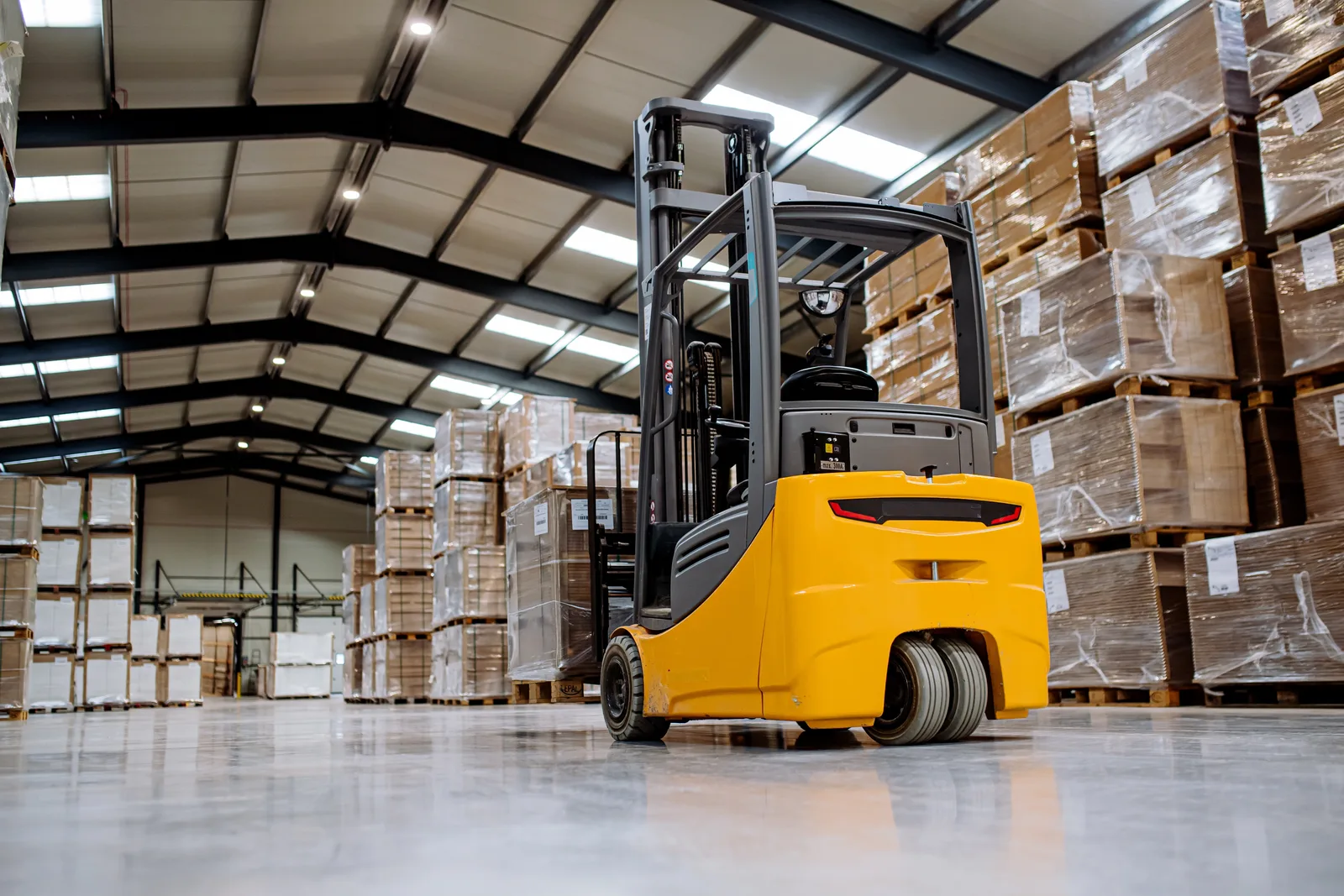
The exposure here is defined by what surrounds the machine rather than by the machine. Capacity falls away as the boom extends, which is universal, and the ground under an outrigger is rarely engineered for a point load, which is also universal. What Rhode Island contributes is proximity. There is almost no site in this state where a dropped load lands on nothing: it lands on a neighbor, a parked car, a sidewalk, a party wall, or the trade working below. Mill and older masonry conversions concentrate all of it — heavy material lifted into a structure that predates the loads now being placed into it, from a setup area barely wider than the machine. Coastal weather adds a winter of freeze and thaw working on those yards, and salt air working on everything left in them.
Common Rhode Island forklift claims we see
- Load dropped onto a neighboring property. The defining claim on lots this size, and the one that is never confined to your own site.
- Boom or load contact with an occupied structure. Swing paths here run past walls and windows that belong to somebody else entirely.
- Struck-by injury in a confined setup area. The severe outcome, and the one that brings a federal investigation to a site with no room for it.
- Forward tip at extended reach. Capacity spent on reach, usually on a lift that was inside the chart when it started.
- Damage while placing into old masonry. Mill conversions put a modern load against a structure built for a different one.
Why Rhode Island forklift owners choose Equipment Guard Insurance
Brokers reach for a machine value on this class and stop, which gets the cheap half right and the expensive half wrong. On a Rhode Island telehandler account the severity is almost entirely outside your own property line — the neighbor, the street, the trade below the boom — and that lives in liability rather than on the equipment schedule. We write the equipment monoline so the machine and its attachments can be scheduled properly without disturbing arrangements built around your registered work, and we ask about swing paths and setup areas before we ask what the unit cost. We place through markets — named on our homepage — that will underwrite a constrained-site lifting exposure rather than treating it as ordinary contractors equipment.
Major Rhode Island forklift markets
- Providence. Dense downtown and hospital-district construction where the boom works over live streets and the setup area is the sidewalk.
- Pawtucket. Mill conversion work at its purest — heavy material into old masonry from yards with no room to reposition.
- Warwick. Commercial and transport-adjacent projects with better access but heavy traffic exposure around the site perimeter.
- Cranston. Suburban commercial and multi-family build-out where finished work is damaged more often than structure is.
- East Providence. Waterfront industrial and redevelopment ground, much of it fill, with a water table that does the rest.
- Woonsocket. Northern mill-town rehabilitation on steep, narrow lots where positioning the machine is half the job.
Related
- Forklift insurance — the machine physics that hold in every state.
- Skid Steer insurance in Rhode Island — the machine that fits the alleys this one struggles to turn around in.
- All equipment insurance in Rhode Island — the state hub.
- Equipment floater · Rented & leased equipment
Primary sources
- State Plans — Occupational Safety and Health Administration (operator safety)
- General Contractor Registration — Rhode Island Contractors’ Registration and Licensing Board (contractor licensing)
Rhode Island forklift insurance FAQs
Which authority investigates a lifting incident in Rhode Island?
A federal one. Rhode Island runs no approved plan reaching private-sector employers, so the powered-industrial-truck training and evaluation requirements apply as the federal standard directly, and the inspection, the citation and the appeal are all federal. That surprises owners here, because the state is otherwise unusually present in a contractor’s working life.
Present how? What does the state actually require?
Registration, of everyone. Every general contractor and every subcontractor building or repairing a structure has to register with the Contractors’ Registration and Licensing Board — a mandatory statewide requirement, not a threshold or a trade-specific one. The result is a state register of the construction industry more complete than most states keep, maintained by a board with no authority over how a machine is operated.
So what happens to my registration after a bad incident?
The board is a complaints and registration authority rather than a safety regulator, so a federal safety finding is not automatically its business. But the incident is still on your record, and in a state this small a serious loss is not anonymous. The practical effect is reputational and commercial rather than regulatory — which is a harder thing to insure against and a much easier thing to underestimate.
Connecticut and Massachusetts run their own plans, don’t they?
They run approved plans that cover only state and local government employees. A private equipment contractor working in either state is under federal OSHA, exactly as in Rhode Island. This is worth being precise about because the loose version — “that state has its own plan, so my operators answer to it” — is simply wrong, and a crew that works all three states in a month is under one federal standard the entire time.
What does building in the most compact state in the country do to this machine?
It removes the margin. There is very little open site here; a telehandler works between an existing building and a public sidewalk, swings a load over a street that stayed open, and reaches into structures that were finished long before anyone thought about equipment access. Mill conversion work is the extreme case — heavy material lifted into old masonry from a yard barely wider than the machine.
Will you write the telehandler on its own?
Yes. Equipment Guard Insurance places equipment monoline in Rhode Island, so the machine and its attachments go on their own schedule. On sites this tight we spend most of the conversation on what the boom passes over, because that is where the severity is.