
A reach machine is the piece of equipment a Wyoming crew stops thinking about first. It stages components on a pad, lifts material to a roofline, carries whatever the day needs across ground nothing else would cross, and never comes up in a conversation until it puts a load somewhere it should not.
The interesting thing about Wyoming is which obligations move with the machine and which do not. Licensing and machine registration change when the crew crosses a county line; the safety program does not, because this state runs its own and it covers the whole of it. For how the machine itself behaves — capacity at reach, load charts, bearing, the forward-tip pattern — begin at the forklift insurance pillar.
What forklift insurance costs in Wyoming
No premium belongs on a page for this class, because the rating is a conversation about people, distance and records rather than about the unit. The Wyoming inputs that move it are how many operators run the machine and whether each is evaluated on that specific model, how far the work sits from a yard and from help, whether the season is spent on energy sites or in town, how the unit is secured and stored when the crew leaves it out, and your own loss record. The value of the telehandler is one of the least important numbers in that discussion, which surprises most owners who call about it.
Wyoming forklift regulations: who enforces operator safety
Wyoming operates its own OSHA-approved State Plan covering private-sector employers, so powered-industrial-truck operator training, evaluation and enforcement run through the state program rather than federal OSHA directly.
Two things follow, and the second one is the Wyoming point. The first is the ordinary consequence of a state program: an approved plan has to be at least as effective as the federal standard, so operator training, evaluation against the specific machine and refresher obligations are no lighter here — what changes is that the inspector, the citation and the appeal all belong to the state, and a crew working into a neighboring federal-enforcement state answers to a different agency for identical work. The second is the contrast with everything else this state does. Wyoming has no statewide general-contractor license; cities and counties license contractors themselves. It does not register self-propelled construction machinery as an ordinary vehicle either, treating it as mobile machinery under a county registration scheme. So a contractor working three counties in a season deals with three licensing conversations and a registration question that changes with the plate, while the one authority that can shut a job down over an operator is constant across the whole state. Owners here are used to obligations being local. This one is not, and it is the one attached to the machine that hurts people.
Common forklift risks in Wyoming
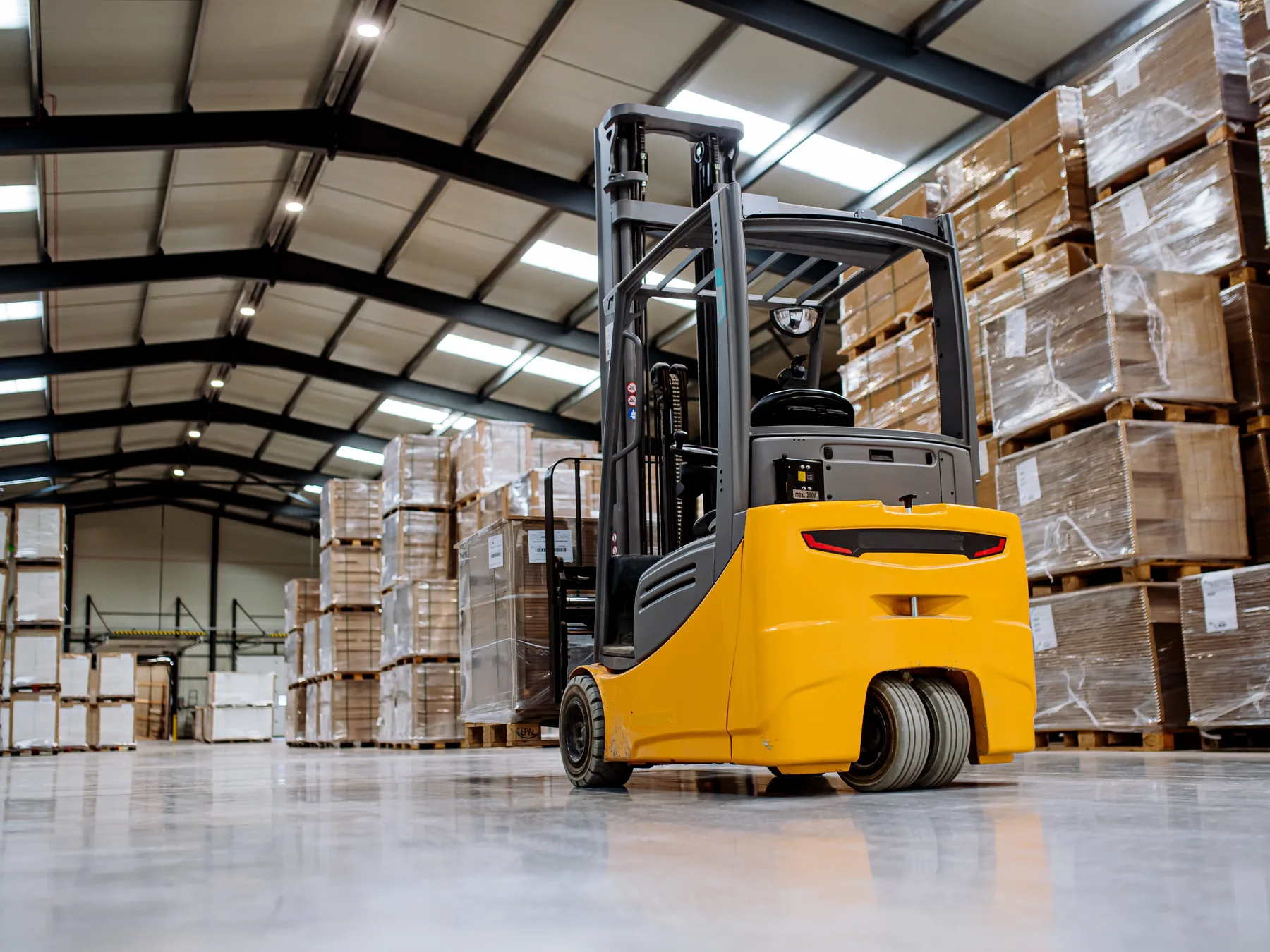
The load and the person near it carry these claims; the telehandler rarely does. What Wyoming adds is distance and air. Remote energy and pad work means an injury under a dropped load is a long way from care, and the same distance keeps a damaged machine idle for longer than the repair itself would suggest. Sustained wind gives a suspended load a surface to work on at exactly the moment the boom is furthest out, and altitude and cold narrow the stability margin an operator is unconsciously relying on. Frost, thaw and disturbed pad material do the rest, turning bearing into something that has to be rechecked rather than assumed.
Common Wyoming forklift claims we see
- Load lost while staging components on a remote pad. Replacement material has to travel before work restarts, which is most of the cost.
- Forward lean at extension in wind. The chart assumed still air, and the operator has no way to feel the margin disappearing.
- Worker injured under a suspended load far from care. The single largest exposure on this class, and distance makes every version of it worse.
- Pad settlement on frost-disturbed or freshly worked ground. A set-up that was sound at the start of a shift and is not by the end of it.
- Contact damage on finished resort or municipal work. Tight sites and expensive finishes are the other half of this state, and they punish a small misjudgment hard.
Why Wyoming forklift owners choose Equipment Guard Insurance
The equipment schedule is the easy part of a Wyoming lifting account, and we would rather say so than pretend otherwise. What decides a bad year is a person hurt under a load a long way from a hospital, and material that has to be trucked back in before anybody can work again. Those are liability, injury and time exposures, not floater ones. We write equipment monoline so the machine can be scheduled properly without disturbing whatever else you have arranged around county paperwork, and we place through markets — named on our homepage — that will underwrite remote jobsite lifting rather than pricing it as if it were work in town.
Major Wyoming forklift markets
- Cheyenne. The steadiest commercial, institutional and government lifting in the state, on sites where documented operator evaluation is checked before a machine works.
- Casper. The central service base for energy work, with machines that leave for weeks and get inspected only when they come back.
- Gillette. Heavy industrial and extraction-adjacent construction, where reach machines stage components on open ground in constant wind.
- Rock Springs. Southwestern industrial and corridor work with the longest approaches in the state and the least support near the site.
- Laramie and Sheridan. Campus, municipal and regional building at altitude, where cold seasons compress the work into fewer months.
- Jackson. Resort and high-value residential construction on constrained mountain lots, where every placement happens close to finished work.
Related
- Forklift insurance — the machine physics that hold in every state.
- Backhoe insurance in Wyoming — the machine that has to be registered county by county before it works at all.
- All equipment insurance in Wyoming — the state hub.
- Equipment floater · Rented & leased equipment
Primary sources
- State Plans — Occupational Safety and Health Administration (operator safety)
- Licensing - Electrical Safety, Wyoming State Fire Marshal's Office — Local city/county governments (general contractors); Wyoming Department of Fire Prevention and Electrical Safety (electricians) (contractor licensing)
Wyoming forklift insurance FAQs
Who enforces forklift operator safety in Wyoming?
The state does. Wyoming operates its own approved occupational safety program covering private-sector employers, so a state inspector attends after a serious incident, the citation is a state citation, and the appeal runs through a state process rather than a federal one. It is the same substance a federal inspector would apply, delivered by a different government.
Why does that matter more here than in other state-plan states?
Because of what it is standing next to. Wyoming leaves general-contractor licensing to individual cities and counties, and it registers self-propelled construction machinery as mobile machinery through a county scheme rather than as an ordinary vehicle. So a contractor moving between counties changes licensing bodies and changes registration questions, and the one obligation that stays constant across the whole state is the safety program. That is unusual, and it is worth knowing which of your files travels and which does not.
What kind of lifting drives the exposure in this state?
Energy work and resort construction, mostly, and they pull in opposite directions. Pad and facility work puts telehandlers on remote sites with long approaches, high wind and few people around. Resort and municipal building in the northwest corner puts the same machine on tight lots at altitude with finished, expensive work close to every placement. One account can contain both in a single season.
Does remoteness change the claim, or just the inconvenience?
It changes the claim. When a worker is injured under a load an hour from the nearest hospital, the outcome is worse than the same event in a metro, and that difference shows up in the reserve rather than in the incident report. Remoteness also delays the machine side — a damaged telehandler on a distant pad sits idle longer, and the business-interruption effect on a small fleet is real even though the repair is modest.
What does the wind here actually do to a reach machine?
It turns a routine placement into a control problem. A load on extended forks at height is a surface for the wind to work on, and this state’s sustained wind is of a kind most operators elsewhere have never worked in. Add altitude and cold, and you have a machine whose stability margin is narrower than the operator expects at exactly the moment the boom is furthest out.
Can you insure the telehandler by itself?
Yes. Equipment Guard Insurance writes equipment monoline in Wyoming, so the machine and its attachments go on their own schedule and nothing else in the program has to move. We will talk separately about the injury and liability side, because on remote work that is where the size of a loss is decided.