
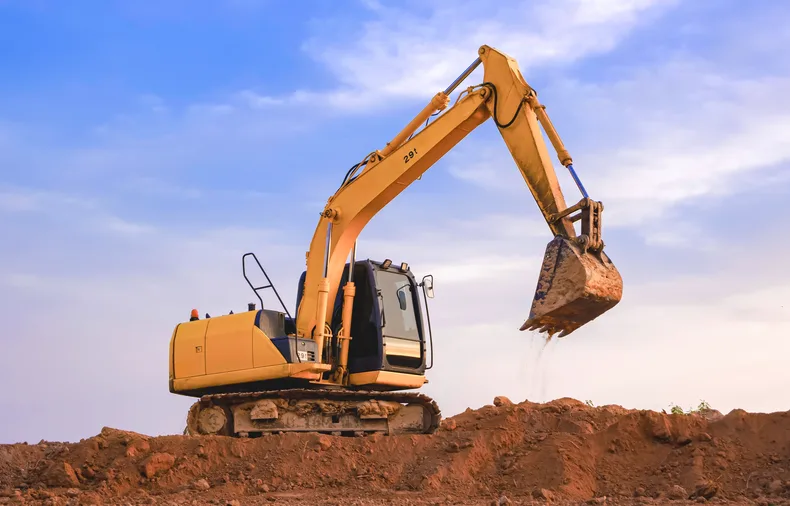

A used machine gets inspected three separate times, and the passes do not overlap. Cold, standing still, you see condition and history. Running and under load, you see capability. On paper, you see what the machine is and what it can be insured for. Skip a pass and you have bought whatever it hid.
Three inspections, and they do not see the same things
Buyers reliably do the first pass well, do the second badly and skip the third. That order is worth inverting, because the third pass is the cheapest and the one that cannot be corrected after the money moves.
The cold pass finds accumulated wear, past repair, neglect and abuse. It is the pass a seller expects and the one a well-presented machine is prepared for. The running pass finds functional weakness — heat, pressure, slip, drift — and it is the pass that requires the seller to cooperate. The paper pass finds out whether the machine is what it is being sold as, whether the seller can sell it, and what it will look like on a schedule.
Plan for all three at the viewing. A machine you have to come back to is a machine you will talk yourself into.
Cold: the walk-around before anything is started
Begin before the seller starts it for you, because a warm machine has already answered the first questions on your behalf.
Walk it once for shape: bent guards, cracked welds around the loader tower or boom foot, a frame that does not sit square, doors and panels that do not line up. Then close: pin and bushing play with the attachment rested down, cylinder rods for scoring and pitting, hose ends for weeping, the radiator core for damage and packing. Look under it. Look at the ground it has been standing on, which tells you what it has been dropping.
Two tells are worth more than the rest. Fresh paint or a recent steam clean concentrated in one area is a question, not a courtesy — ask what was under it. And fluids topped up within the last hour say nothing about consumption, so check the levels cold and look at the color and smell of what is in there.
The wear items that price themselves
Some components wear on their own schedule and are replaced as a set rather than repaired incrementally, which makes them the largest single variable in what a used machine really costs.
On tracked machines that is the undercarriage: rails, rollers, idlers, sprockets, pads. On wheeled machines it is tires, and matched tires with even wear tell a different story from four different makes. Then the wear parts that reveal use rather than cost — bucket teeth and cutting edges, quick-attach latches, the boom and bucket pins.
None of this is hidden. It is the part of a machine that cannot be presented well, which is exactly why it is the most honest thing on the viewing. A compact loader with worn running gear and a spotless cab has been valued for sale rather than maintained, and a backhoe is the same lesson across two axles.
Warm: what only a running machine will tell you
Start it yourself if you are allowed to, from cold, and watch. Cranking speed, smoke color and how long it takes to clear, whether anything is knocking, and whether every warning lamp both illuminates and then goes out. A machine already warm when you arrive has skipped the most informative moments of the viewing.
Then let it reach temperature and stay there. Overheating, cooling-system weakness and hydraulic fade are all conditions that appear late, which is why a short demonstration is a demonstration and not a test.
Work every function through its full travel. Lift, curl, extend, swing, steer both ways, and hold a load raised to see whether it settles. Listen for the pump under load rather than at idle. On machines with a transmission, drive it in both directions through the range and feel for slip. Then load the machine to the extent the site allows, because hydraulics and drivelines fail under load and nowhere else.
Real-World Scenario: A buyer views a compact loader on a trailer in a yard, cold, on a busy afternoon. It starts promptly, the panel lights behave, the cab is tidy and the price is fair, so the deal is done in twenty minutes and the machine is hauled home the same day. On its first real job the loader lifts perfectly for half an hour and then will not hold a pallet at height once the oil is hot. The fault was always there and was always going to be invisible standing still, and the only pass that would have found it was the one the trailer made impossible.
The paper inspection nobody schedules
This is the pass that decides what happens after the machine is yours, and it takes minutes.
Start with the serial plate. Read it, photograph it, and confirm it matches every document offered. A missing, altered or non-matching plate ends the viewing. Then the service history — invoices, a log, dealer records, anything. Ask even when you expect nothing, because a seller who has kept no record of a decade of ownership has answered a question about how the machine was run.
Then ask whether the seller is entitled to sell. Equipment carries no title, so entitlement is established from the seller’s own paperwork and from whether an undischarged financing filing sits against the machine — a question with its own mechanics, set out in full in proving you own an untitled machine. Get a bill of sale naming the serial, not a category. Ask about attachments explicitly, because what is in the photographs is not necessarily in the sale.
What the machine’s history does to the settlement basis
Here is the part buyers learn afterward. Condition and documentation do less to whether a machine can be insured than to how it is valued when it is.
Older and heavily used machines generally sit more naturally on an agreed value or actual cash value footing than on a replacement-cost one, and an agreed figure is easier to support when there is a service record and a recent purchase invoice behind it. That decision is made when the machine joins an equipment floater schedule — at binding, on the strength of the paperwork you brought home from the viewing, not at claim time on the strength of what you remember about it.
Which means the paper pass has two purposes. It protects the purchase, and it sets the ceiling on what the machine can be scheduled for afterward.
The day it becomes yours, and the haul that follows
The gap that catches buyers is not the policy. It is the trip home.
Purchases happen on site, and the machine is loaded and hauled immediately, before anybody has told a broker anything. Many equipment programs allow a short reporting window for newly acquired machines, but that allowance has conditions attached and is not a substitute for reporting. Meanwhile the loading, hauling and unloading legs are the ones the transit and trailer coverage part exists for.
So make the call before the straps go on, or arrange delivery. Then document the machine on arrival exactly as you would document one leaving your own yard — the condition record for a machine you have owned for one hour is the most valuable one you will ever take of it.
Who runs it, and what that adds
An inspection tells you about a machine. It says nothing about the exposure the machine brings, and the second is the larger question on a purchase that adds capability rather than replacing it.
A machine type new to your crews needs somebody trained on it, and training records are what supports both the workers compensation side and any later defense. A machine that will be rented out or lent between businesses raises questions the owned schedule does not answer, and the not-owned coverage part covers the mirror image of that arrangement.
Add the machine to the theft controls you already run, rather than treating it as an exception because it is new and parked where there is room.
The findings that end a viewing early
Some findings are negotiating points and some are exits. Keeping them separate saves a great deal of time.
Negotiate on: undercarriage or tire life, weeping cylinders, cosmetic damage, tired wear parts, a missing manual, an attachment you do not want. All of those are priced.
Walk away from: a serial plate missing, altered or disagreeing with the paperwork; a seller who will not let the machine be run, warmed or loaded; a machine presented in a way that makes the running pass impossible; fresh paint or cleaning over one specific area; and any answer about financing or entitlement to sell that arrives vaguely. Each of those obscures the exact thing you came to establish, and a purchase you cannot inspect is a purchase you are making on trust rather than on evidence. To have a machine read against a schedule before you commit to it, send the details through the quote form, or read more about how we place equipment.