
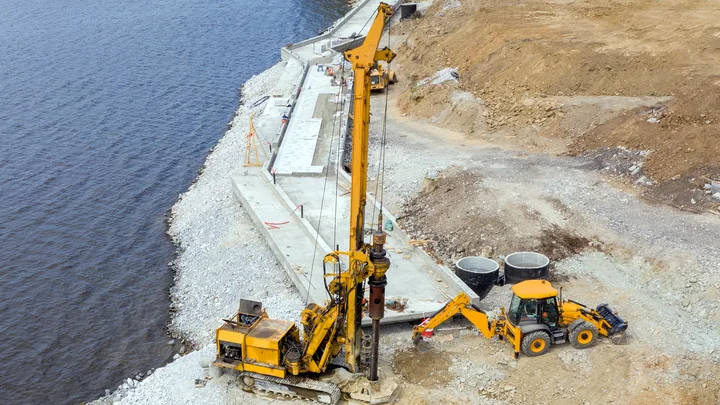

Compaction is the one equipment class where the word on the schedule tells you almost nothing. It covers hand-guided plates, jumping rammers, remote trench rollers, walk-behind drums, ride-on double drums, padfoot machines and landfill units. Those are not variations on a theme. They are different risks sharing a name.
One word on the schedule, several different machines
Every other class on an equipment schedule describes something recognizable. A loader is a loader. Compaction is a category, and the machines inside it differ by more than an order of magnitude in value, in how they travel, in who operates them and in how they are lost.
That matters because underwriting is a reading exercise. An underwriter handed a line reading “compaction equipment” with a single number beside it has no way to price the population behind it, and the safe assumption is rarely the flattering one. An equipment floater schedule that names the machines is not more paperwork — it is the difference between being rated on what you own and being rated on what the category usually contains.
There is a claims consequence as well as a rating one. When a mixed compaction fleet is aggregated into a single line, an adjuster has no document establishing which machines existed before the loss, and the burden of proving what was on site lands back on the owner at the worst possible moment.
The rest of this guide walks the ladder from the bottom rung to the top, because the exposures change at every step and so does the right answer.
The bottom rung walks off
Plates and rammers are the smallest serious machines on a jobsite and the most frequently stolen equipment a contractor owns. They fit in a pickup bed. They need no trailer, no key discipline and no expertise to remove or resell. A crew can leave one behind at a completed job and not notice for a week.
Individually these are small numbers. Collectively, across a working season and several crews, they stop being small. The scheduling decision is genuinely different at this rung: many contractors carry them under blanket small-equipment wording rather than as named items, which is defensible so long as the limit was set against the whole population rather than against the two machines anyone can picture.
Ownership proof is the other half. Compaction gear this size is untitled, so a claim rests on purchase records and serial numbers exactly as it does for a compact loader — the mechanics of that, with the state filing rules set out in full, are covered in our guide on what drives skid steer insurance cost.
Walk-behind and trench rollers: small machines in bad places
The next rung up trades portability for position. Trench rollers work inside excavations, which is the one location on a site where a person should not be standing, and remote-control operation exists precisely to keep the operator on the surface.
That is a genuine improvement in the injury exposure, and it shows in the workers compensation side of the file. The equipment exposure does not improve at all. A machine working at the bottom of a trench is a machine that a wall failure buries, that groundwater floods, and that cannot simply be driven out when conditions change. Recovery is a crane conversation, not a walk-out.
Excavation work also carries the underground-strike exposure alongside it, and the dig-notice timing rules that govern it are state law rather than jobsite custom. Our Ohio cost guide works through one state’s notice structure with the statute in hand.
Ride-on drums and the vibration question
Ride-on drum rollers are the first rung where the machine can damage something it never touches. Vibratory compaction puts energy into the ground, and the ground carries it. Older masonry, shallow foundations, slabs, brittle buried utilities and finished hardscape on adjacent parcels can all respond to that energy, and the response is frequently delayed.
This is a liability exposure rather than an equipment one, and it runs through general liability. It is also the compaction claim most likely to arrive months after the crew has left, from a party who was never on the job. The defense is documentary and it has to be built before the work starts: a photographic condition survey of nearby structures, a note of what amplitude setting was used where, and a record of who asked for the compaction specification in the first place.
That last item matters more than it looks. Density requirements come from an engineer rather than from the crew, so an operator told to reach a number close to an old wall is being asked to accept a risk somebody else selected. Raising it in writing before the work starts costs nothing and changes who owns the outcome.
Real-World Scenario: A crew compacts subgrade for a parking area behind a row of older commercial buildings, working close to the rear wall on the last two passes because that is where the specification calls for density. The work goes fine, the site closes out, and nothing happens for six weeks. Then a tenant reports cracking in an interior wall and the building owner’s letter arrives naming the compaction work. Nobody on the crew remembers the condition of that wall beforehand, and that gap — not the cracking — is what makes the claim expensive.
Padfoot and landfill machines at the top
At the top of the ladder the machines stop being portable in any ordinary sense. Padfoot rollers and landfill compactors ride a lowboy, take a permit-worthy load to move, and often stay on one site for the duration of a project.
The exposures flip completely. Theft becomes unlikely and unattended-site accumulation becomes the concern instead, because a machine that cannot be moved quickly is a machine that sits through weekends and weather. Transport becomes a rare, high-consequence event rather than a daily routine — which is exactly why it goes wrong, since infrequent moves are handled by whoever is available. Transit and trailer transport answers for the machine on the deck and through loading, and the auto policy does not.
Operator exposure changes at this rung too. Large compaction machines work on uneven, freshly placed material with poor sightlines and other equipment moving around them, which is a different injury profile from a walk-behind unit on a prepared surface, and it belongs in the same workers compensation conversation rather than being treated as the same class of work.
Landfill work adds ground conditions of its own, and long-duration earthmoving sites carry land-disturbance obligations that mark where a job changes character. Our dozer cost guide sets out that permitting structure with the state agencies cited.
Where the ladder breaks the schedule
Most compaction underinsurance is not a decision. It is accumulation. A plate arrives on the invoice for a larger machine and is remembered as part of that purchase. A rammer replaces one that failed and nobody tells the office. A roller is bought used from another contractor with a handwritten bill of sale.
The fix is a physical inventory rather than an accounting one — walk the yard and the trucks, write down what is actually there, and reconcile that against the schedule. Every compaction schedule we rebuild turns up machines nobody listed and at least one machine that was sold two seasons ago and is still being insured.
Rental is the default on this class
Compaction is rented more than it is owned, and for good reason: the correct drum width changes with the job, and few contractors want four rollers sitting idle. That makes rental exposure the normal condition here rather than the exception.
An owned schedule answers for owned machines. The rental agreement makes you responsible from the moment of delivery to the moment of return, including theft, damage and in many cases charges for the time the unit spends off the rental line. Rented and leased equipment is the coverage part that answers, and the limit belongs at the size of the largest machine you might take in a busy month.
Mixed weeks are where this goes wrong. A contractor who owns two rollers and hires a third at peak usually finds it is the hired one that gets damaged, because it is the machine nobody on the crew has run before and the one whose controls, weight and turning behavior are unfamiliar.
What to fix before you shop it
Three things, in order. Write the ladder out — every machine by rung, with serial numbers where plates exist and honest values everywhere. Set the blanket limit for the bottom rung against the whole population rather than the memorable part of it. Then decide the rental limit against your peak, not your average.
Do those and the conversation changes from a category to a fleet. Send the rebuilt list through the quote form and we will read it rung by rung, and the compactor overview covers the class in full, alongside the skid steer pillar for the compact machine these usually share a trailer with.