

Equipment insurance in Minnesota is priced across a working year that frost cuts short at both ends. A fleet that earns hard from May to November still has to be insured in January, and the storage months, the thaw restart and the compressed peak each carry a different exposure that an underwriter reads separately.
The winter yard is a rating question, not a pause
Most contractors describe their operation as it looks in July, because that is when the business feels like itself. Underwriters read the other half too. From the moment the season closes until the ground opens again, the entire schedule is sitting somewhere, and where it sits is one of the very few facts a contractor can change before a renewal.
The failure mode is not exotic. Machines get consolidated into whatever space is available at the end of a season — a leased lot, a landowner client, the back half of a yard belonging to somebody the owner knows. None of that reaches the application, which still describes the arrangement in place when the policy was written. A schedule that is accurate about serial numbers and wrong about location is only half a document, and the equipment floater is priced off both halves.
Winter also concentrates the fleet, which concentrates the loss. Iron scattered across four active sites can only be hit four ways; the same iron in one unlit lot can be hit once. Underwriters weigh storage specifically because it is the control most directly tied to the dominant off-season loss cause, and because it is verifiable. A gate, a light, a camera and keys held somewhere other than the cab are ordinary measures that change recovery odds, and a recovered machine closes a file rather than settling one.
Real-World Scenario: A grading contractor closes out the season and moves the whole fleet to a rented lot near a client’s property because the home yard is being resurfaced over the winter. Nobody thinks of it as a policy matter — the machines are off the road and nothing is running. In February a loader and two attachments go missing, and the first question in the claim file is where the machines were kept and whether the arrangement matched what the application described. The equipment was insured. The conversation is entirely about the address.
Frost-out: the season restarts with a locate ticket
When the ground opens, everything starts at once, and the first thing most crews touch is a notification. Minnesota sets both edges of the window. Under Minn. Stat. § 216D.04, notice goes to Gopher State One Call at least forty-eight hours before excavation begins — excluding the day of notification, Saturdays, Sundays and holidays — and not more than fourteen calendar days before.
The outer edge is the one that bites in a compressed season. A scheduler who front-loads tickets in the first warm week is planning for a start date that spring weather has a habit of moving. When the start slips past the outer edge, the ticket has expired and the machine that arrives on the strength of it is working unnotified.
A utility strike is rarely an equipment claim first. The machine damage is the small half; the service outage, the repair cost and the third-party consequences run through general liability, which is why the two lines have to be read together rather than bought apart. Our Minnesota excavator page works the notice mechanics through in more detail.
Once the load limits lift, the iron starts moving
Spring in Minnesota means machines relocating constantly, often several times a week, as jobs that were queued all winter start in parallel. Every one of those moves is an exposure that has nothing to do with how the machine is operated.
The policy boundary is definitional. Minn. Stat. § 168.002 classes self-propelled construction machinery as special mobile equipment — vehicles not designed or used to transport persons or property and only incidentally moved over a highway, with ditch-digging apparatus and road construction machinery named expressly. The machine is therefore not a registered highway vehicle, and it does not belong to the auto policy.
That leaves three parts to reconcile: the machine on the schedule, the tractor and trailer on commercial auto, and the machine while it is chained down and in motion, which belongs to transit and trailer transport. Loading and unloading is where a meaningful share of equipment damage happens, and it is the point most often assumed to be somebody else’s problem. The Minnesota backhoe page covers the road-operation side.
The compressed peak, and the machines added inside it
A short season pushes capacity decisions into a narrow window. Contractors buy mid-year because a job demands it, and they rent because buying would not pay back over the months the machine could actually work.
Both create the same gap in different ways. Most floaters carry a newly acquired provision that picks up a purchase for a limited reporting window so a machine is never uninsured on the day it arrives — but the machine still has to reach the schedule inside that window, and in a busy July it frequently does not. Rented iron is worse, because an owned-equipment schedule answers for the machines listed on it and nothing else, while the rental contract typically makes the renter responsible from delivery through return, including loss-of-use charges. Rented and leased equipment coverage answers that, and the limit belongs at the size of the largest unit a peak week might bring in.
Ground disturbance in a short building season
The Minnesota Pollution Control Agency administers a combined federal and state construction stormwater general permit, and coverage under it is triggered when land disturbance reaches one acre or more.
This is an environmental obligation rather than a rating input, and no underwriter prices it directly. It matters here because it marks a change in the character of the work. Jobs that cross the threshold run longer, hold more machines on site between phases, and leave graded ground open through a weather season that arrives quickly. Duration and accumulation are quiet drivers on a dozer-heavy schedule, and the Minnesota dozer page sets out the permit structure.
Training runs on a state program here
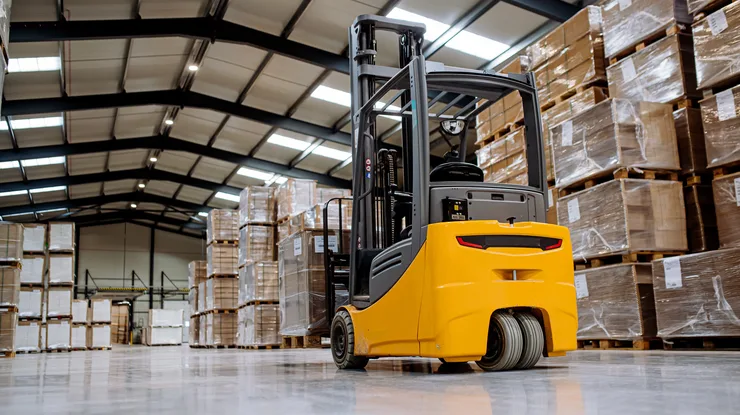
Minnesota operates its own approved State Plan covering private-sector employers, so powered-industrial-truck operator training, evaluation and enforcement run through the state program rather than through federal inspectors directly.
For an equipment buyer the practical difference is administrative rather than substantive — the training obligation lands in the same place — but the documentation question is identical either way. Operator qualification files, evaluation dates and refresher records are what an underwriter asks for after a lift injury appears in a loss run, and what a defense rests on afterward. A crew that trains well and records nothing is indistinguishable on paper from a crew that does neither. That exposure runs through workers compensation and the liability layer at the same time; the Minnesota forklift page works through the standard.
What the state does and does not credential
The Department of Labor and Industry handles residential contractor licensing for building contractors, remodelers and roofers who contract directly with homeowners and offer more than one skilled trade. Outside that, commercial and general non-residential contracting carries no statewide license and is regulated through code and permitting.
For most site and earthwork operations that means there is no state credential for an underwriter to treat as a proxy for vetting. The questions land on the operator instead: how long the business has run, what the work consists of, who runs the machines and what the loss record shows. That is not extra scrutiny; it is the absence of a shortcut.
Ownership proof works the same way. Construction equipment is not titled like a truck, so after a theft the schedule, the purchase record and the serial number do the work a registration would — a mechanic we set out with its sourcing in the companion guide on what drives skid steer insurance cost.
Where the policy year meets the working year
The last thing worth planning is timing. A policy that renews in the middle of the peak is renewed on the worst information the business will produce all year — schedules half-updated, rentals in flight, nobody available to answer questions carefully. A renewal that lands in the quiet months gets a considered answer, and considered answers price better than rushed ones.
Send a current machine list through the quote form and we will read it against the season it actually works, or start from the Minnesota location page if you are comparing across state lines.