
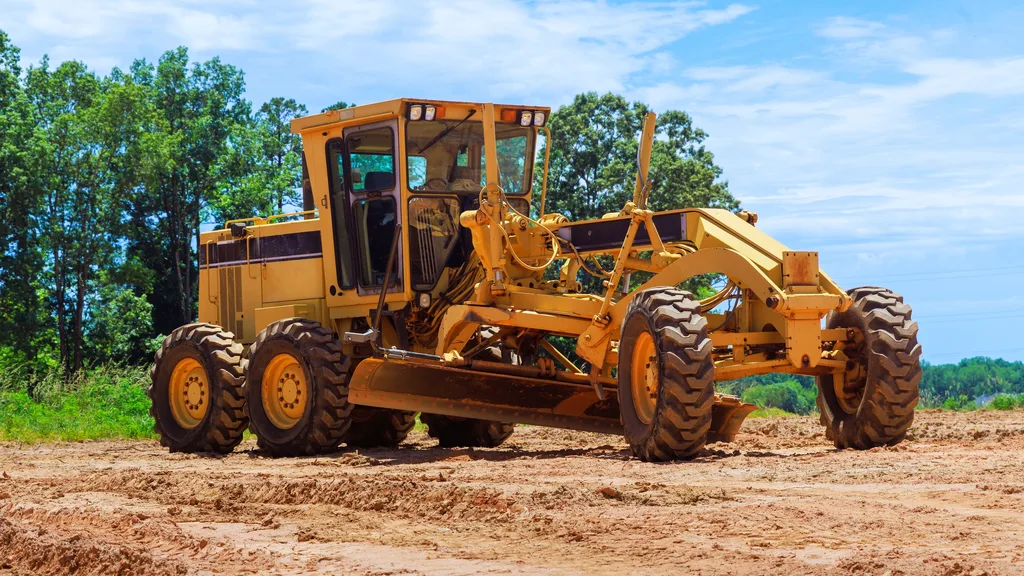

Vermont packs most of a year of equipment work into a short stretch of months and stores the iron through the rest. That rhythm, more than fleet size or machine age, is what shapes an equipment price here — so the most useful way to read the drivers is chronologically, month by month, across a single working year.
Late winter: the registration that has to be current before the phone rings
The year starts with paperwork. Vermont issues no general contractor license, but residential contractors must register with the state professional regulation office before contracting for residential construction above a statutory contract-value threshold. The requirement and its scope are set out on the state residential contractors page.
It is worth being precise about what that is and is not. A registration establishes identity and accountability; it is not an examination of competence, and it does not function the way a trade credential does. For an equipment buyer that means the registration answers one underwriting question and leaves the rest open — which is why operating history, schedule quality and loss experience carry more weight in a Vermont submission than they would in a heavy licensing state. The Vermont location page sets out the wider picture.
Mud season: idle machines are not zero-exposure machines
Between the thaw and the first firm ground there is a stretch where very little moves. Contractors reasonably assume this is the safe part of the year. It is the part where the largest share of unattended-machine losses accumulate.
A machine parked on soft ground shifts. A machine parked at a half-finished site sits behind a fence nobody is checking. A machine moved to a rented pad because the yard is full is at a location the application does not describe. None of that produces claims frequency on its own, and all of it changes what the equipment floater is actually insuring against where it sits.
Real-World Scenario: A crew shuts a hillside job down in late fall with a tracked machine parked on a bench above the cut, planning to restart in spring. The thaw runs early, the bench softens across a week of rain, and the machine ends up well downslope on its side. Nobody was operating it and nobody was on site. The loss still belongs to the equipment policy rather than the liability layer, and that distinction decides how the claim is handled and what recovery looks like.
Spring: premarking, and the window that closes at both ends
When ground work restarts, the dig statute governs. Under 30 V.S.A. § 7004, an excavator premarks the proposed excavation area and then notifies the statewide system at least seventy-two hours ahead, excluding weekends and legal holidays, and not more than thirty days before excavation begins.
Two details are unusual and both bite. Premarking is an affirmative step before the call, not after it. And the window has a ceiling as well as a floor — a ticket pulled too far ahead of a start date that then slips is not a ticket at all. Spring is exactly when start dates slip, which is why this pairing produces more unnotified digs in April than in August. Strike liability runs through general liability rather than the equipment line, and the Vermont excavator page works through the notice mechanics.
Summer: the season compresses everything at once
The working months are where utilization spikes. The same annual hours land in fewer weeks, crews run longer days, and machines that would sit idle in a longer season are working instead.
Two consequences follow. First, rented iron fills the gaps, and rental is the most common uninsured exposure we find anywhere — a rental contract normally makes the renter responsible from delivery through return, including damage, theft and often loss-of-use charges, and an owned-equipment schedule answers for none of it. Rented and leased equipment coverage is the answer, sized to the largest unit you might take in a peak week. Second, machines move more often, and every load and unload is an exposure that transit and trailer transport exists to carry.
Summer, part two: the safety program answering your crew is a state program
Vermont operates its own approved workplace-safety plan covering private-sector employers, as the federal state plans listing records. Operator training, evaluation and enforcement for powered industrial trucks therefore run through the state program.
What contractors teach rarely changes because of that. What changes is whose inspectors arrive and whose documentation standard your files answer to. Operator qualification records are the item requested first after a lift injury enters a loss run, and they sit across workers compensation and the liability layer at once. The Vermont forklift page covers the state-plan structure.
Late summer into fall: land disturbance and the stormwater file
Earth-moving work that disturbs one acre or more falls under the state construction stormwater general permit administered by the state environmental agency. Larger projects may also pass through Act 250 land-use review, which adds a permitting layer rather than an insurance one.
Neither appears on a rating worksheet. Both matter as markers. A job that crosses the acreage trigger or enters land-use review is a longer job holding more machines across more phases, and duration plus accumulation is exactly how a market reads a dozer-weighted schedule. The Vermont dozer page sets out the permit structure.
Fall: the list you carry into winter
Before the machines go away, reconcile the schedule against the yard. What was sold, what was bought, what attachment arrived mid-season and never reached the list. This is the cheapest hour of underwriting work available in Vermont and almost nobody spends it in October.
Ownership proof is the reason it matters more than it sounds. A compact loader carries no certificate of title, so after a theft the proof rests on the bill of sale, the serial number and any financing record filed against the machine. Vermont has no verified filing document in the source set behind these guides, so we state that qualitatively and link nothing for it — the sourced version lives in our guide to what drives skid steer insurance cost, and the Vermont skid steer page carries the local theft posture.
Deep winter: the months that look empty and are not
From the first hard freeze to the thaw, a Vermont fleet mostly sits. Contractors reasonably treat that as the low-exposure stretch, and in one narrow sense they are right — an idle machine is not going to roll over or strike a line. In every other sense it is the period that quietly decides how the next renewal reads.
Start with where the machines actually are. A yard that held eight units in July is holding fourteen in January, and the overflow ends up somewhere: a leased pad, a client site with a gate, a family property. Every one of those is a storage location, and a location the application does not describe is a location an adjuster will ask about. The fix costs nothing — tell your broker where the machines wintered — and it removes the single most common coverage argument that follows a winter loss.
Then consider condition. Machines that sit through a Vermont winter come out of storage with different problems than machines that work through one: batteries, seals, hydraulic fluid that sat cold, rodent damage to wiring. None of that is an insured loss, and all of it produces spring breakdowns that pull crews off schedule in the exact weeks the season cannot spare. Contractors who run a genuine winterization routine and a genuine spring recommissioning check spend less of April fixing what December did, which shows up as fewer rented substitutes and a steadier working year.
What the calendar does to a renewal
A Vermont renewal is largely a question of whether the year behaved the way you described it. Storage locations that held all winter. A locate habit that survived spring. A schedule that matched the yard in October as well as it did in May. Rental exposure that was reported rather than absorbed.
None of those are market conditions and all of them are inside your control, which is the useful part. A contractor who can describe the year accurately is describing something a market can underwrite; a contractor who describes an average year is describing something nobody can check. In a state whose season doesn’t average out, the difference is worth real money at renewal. Send a current machine list through the quote form and we will read it against the working year rather than against a rate table.