
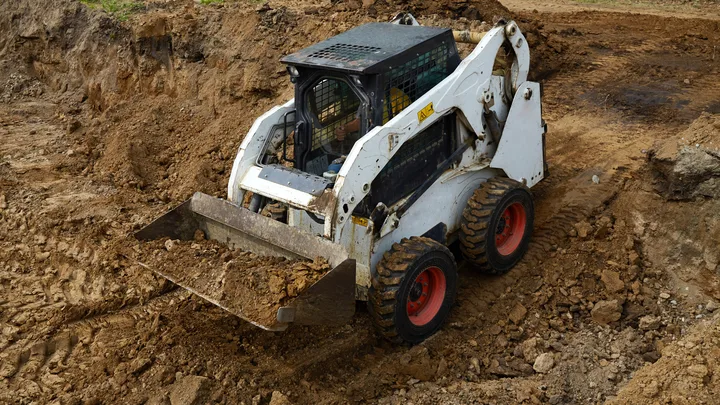

A machine costs what it costs in Delaware because of what happens to it over its life on your books, not because of what it cost to buy. Every stage — arrival, scheduling, digging, hauling, staffing, disposal — leaves something behind in a policy file, and most of the gaps we find open at the joins between stages.
Week one: the machine arrives before the paperwork does
The most expensive week in a machine’s insured life is usually its first. A unit gets delivered against a job that has already started, the crew puts it to work the same afternoon, and the office learns about it when the invoice arrives.
Most equipment floaters anticipate this with a newly acquired provision that extends coverage to a purchase for a limited reporting window. It is a bridge and nothing more: the machine has to reach the schedule inside that window or the bridge simply ends. The habit of reporting matters more than the wording, and an unscheduled machine remains the most common gap we find at a renewal on the equipment floater.
Two decisions belong in that same week. The value basis — agreed, replacement or actual cash value — settles what a total loss pays, and it is a binding decision rather than a number handed down later. And attachments bought with the machine need their own lines, because a coupler plate does not transfer coverage.
The license Delaware actually issues
Contractors arriving from other states often expect a competency credential and do not find one. Delaware requires a contractor business license under Title 30, Chapter 25 of the Delaware Code, administered as a revenue and registration obligation rather than a skills examination, while specialty trades such as electricians and plumbers are licensed separately on their own terms.
The pricing consequence is the same one that shows up in every state without a general credential: there is no shortcut for an underwriter to take. The questions land on the operation instead — how long it has run, what the work consists of, who runs the machines, what the loss history shows. The Delaware location page sets out the wider state framing.
Entering the machine on the schedule
An equipment schedule lists each machine by serial number, year, make and insured value, and that list is the document being priced. Two contractors with identical revenue can land in very different places because one list matches the yard and the other was rolled forward from last year with new dates.
Attachments are where schedules go wrong quietly. Buckets, breakers, augers, grapples and forks migrate between machines and between crews, and a high-flow head or a planer can be worth more than the carrier under it. A list of machines with no attachment lines understates the fleet by a margin nobody discovers until a settlement is being calculated.
Serial accuracy carries more weight here than most owners expect. Construction equipment is not titled the way a truck is, so after a theft ownership is established from the purchase record, the serial number and any financing filing against the machine — the schedule is doing the work a registration would do. Delaware carries no cleared state document for that mechanic, so nothing is linked for it and no citation is offered; the sourced treatment lives in our companion guide on what drives skid steer insurance cost.
The day it first digs
Once the machine goes to work, the exposure stops being about the machine. Under 26 Del. C. § 806, notice must reach the regional notification center not less than two working days before excavation begins and no more than ten working days before it.
The outer edge is the one that catches crews. A ticket pulled for a phase that slips behind a design change or a materials delay expires without anyone noticing, and the operator who arrives holding it is digging unnotified. A short outer window rewards scheduling notice against the day a machine will actually break ground rather than against the day the phase was first drawn.
A strike is rarely an equipment claim first. The machine usually survives; the service outage, the emergency repair and the third-party consequences run through general liability, which is why the two lines have to be read together rather than bought apart. Our Delaware excavator page works through the notice mechanics in more detail.
Real-World Scenario: A site contractor trades an aging loader against a newer machine mid-season. The dealer collects the old unit, the new one goes straight to a job, and the schedule is never touched — the traded machine is still listed and the replacement is not. Months later the newer machine is damaged on site. Everything about the claim is straightforward except the one fact that decides it: the machine that was hurt was never on the policy, while the machine on the policy had not been in the yard since spring.
Putting it on a trailer
Delaware is small enough that machines move constantly, which makes transit an ordinary weekly exposure rather than an occasional one. Self-propelled construction machinery here is treated as special mobile equipment that is not registered as an on-road vehicle and is only incidentally operated on public roads. That treatment is not carried by a cleared state document we can cite, so we state it as the operating principle it is and link nothing for it; the Delaware backhoe page carries the road-operation material.
The consequence is a three-part boundary. The machine sits on the equipment schedule. The truck and trailer sit on commercial auto. The machine while it is loaded, hauled and unloaded belongs to transit and trailer transport — and loading and unloading is where a meaningful share of equipment damage actually happens. Contractors who assume the auto policy follows the machine onto the deck are describing a gap rather than a coverage.
Handing it to an operator
A machine only becomes an injury exposure when somebody stands next to it. Delaware is under federal OSHA for private-sector employers, so powered-industrial-truck operator training and evaluation requirements apply as the federal standard directly, without a state overlay to reconcile.
What matters at renewal is documentary rather than substantive. Qualification files, evaluation dates and refresher records are what an underwriter asks for once an injury shows up in a loss run, and what a defense rests on afterward. A crew trained well and recorded nowhere reads identically to a crew that was never trained. That exposure runs through workers compensation and the liability layer at once, and the Delaware forklift page sets out the standard.
Working a graded site
Larger earthwork changes what a machine is doing all day. The state environmental agency administers a construction stormwater general permit, with authorization triggered when land disturbance reaches one acre or more.
No underwriter prices that permit. It earns its place in a cost discussion as a marker: sites above the threshold run longer, hold more machines standing between phases and leave open ground exposed to weather. Duration and accumulation are the quiet drivers on an earthmoving schedule, and the Delaware dozer page works through the permit structure.
Selling it, and the schedule that never noticed
The last stage is the one nobody schedules time for. Machines get sold, traded, scrapped or moved to a related entity, and the schedule keeps carrying them — paying for iron that left the yard while the machine that replaced it sits uninsured.
Rentals produce the same asymmetry from the other direction. An owned-equipment schedule answers for the machines listed on it and nothing else, while a rental contract normally makes the renter responsible from delivery through return, including loss-of-use charges. Rented and leased equipment coverage answers that, with a limit set against the largest unit a busy month might bring in.
There is a second cost to a stale list that has nothing to do with the missing machine. A schedule that no longer matches the yard weakens every other answer on the application, because it is the one document an underwriter can check against reality. Once it stops being reliable, storage answers, radius answers and control answers all get read with more caution than they deserve.
A schedule read once a year, in the quiet season, catches nearly all of it — additions, disposals, attachment purchases and the value drift that follows a machine as it ages. Send a current list through the quote form and we will read it against the stages above.