
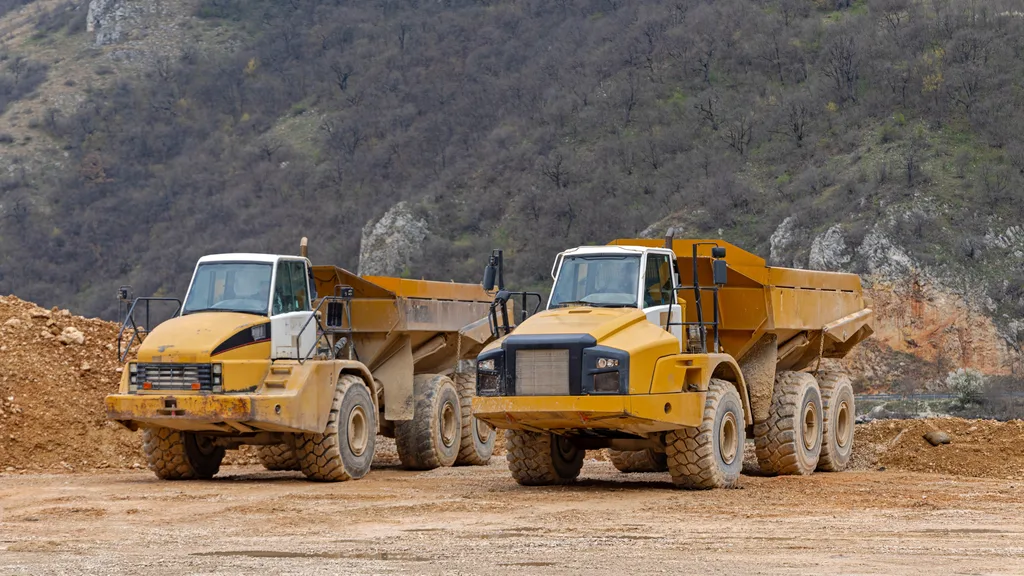

Follow one machine from purchase order to resale and Idaho equipment pricing explains itself. Registration comes before the work, the schedule entry comes before the first job, and the settlement basis chosen on delivery day decides what a claim looks like years afterward. Cost here is a lifecycle question rather than a snapshot.
Before the machine: the registration behind the work
Idaho does not test general contractors. What it requires is registration with the Contractors Board, administered through the Division of Occupational and Professional Licenses, for construction work above a statutory contract-value threshold — an entry requirement, not a competency exam. Electrical, plumbing and mechanical trades hold their own state licenses in addition. The framework sits in the Idaho Contractor Registration Act.
The distinction is worth holding onto, because it decides how much a submission has to say for itself. A registration confirms that a firm exists on the record and has met an administrative bar. It does not describe capability, scope or discipline, so none of that can be inferred from it. In practice an Idaho file is read on operating history, on the machine list and on the loss runs, with registration functioning as a threshold rather than as evidence. The Idaho location page sets out what we ask for instead.
Delivery day: the entry that has to happen this week
A machine becomes an insured machine when it reaches the schedule, not when it reaches the yard. Most equipment floaters carry a newly acquired provision that picks up a purchase for a limited reporting window, which is what stops a delivery from being uninsured — but the window closes, and the reporting habit is what actually keeps a fleet covered.
Two decisions belong to that same day. The first is insured value, which should reflect what replacing the machine would actually take rather than what the invoice happened to say. The second is settlement basis: actual cash value settles net of depreciation, while an agreed or replacement basis settles against a figure fixed at binding. Both belong in the equipment floater, and both are far easier to set correctly on delivery day than to argue about after a loss.
Real-World Scenario: A contractor picks up a compact loader at a spring auction in the Treasure Valley, drives it straight to a job that started the week before, and puts it to work the same afternoon. The paperwork goes into the truck door pocket. Nobody sends it to the broker, the reporting window quietly closes, and the machine works the whole season as an unscheduled unit. It performs perfectly. The problem only becomes visible the following winter, when a different machine is damaged and the adjuster asks for the current schedule — which no longer matches the yard.
The first season: ground, notice and what the bucket finds
Idaho puts a floor and a ceiling on excavation notice. A locate request must be made not less than two business days and not more than ten business days before the scheduled start, and facility owners must respond within two business days of receipt. The provision is Idaho Code § 55-2205.
Both edges bite in different ways. The floor catches the crew that decides to start early because the ground looks clear. The ceiling catches the organized contractor who pulls tickets for a whole phase in advance and then watches a design change push the work past the window. The second failure is more common among careful firms, which is a useful thing to know about yourself.
A strike is rarely a machine loss. It becomes a general liability matter — third-party damage, an interrupted service, and a repair crew billed at whatever an emergency costs. Underwriters ask about notice discipline for that reason, and the Idaho excavator page works the mechanics through with the citation attached.
Between jobs: the machine as cargo
Somewhere in its first season the machine becomes freight. Idaho classes self-propelled construction machinery as special mobile equipment — designed for a function other than carrying people or property, and only incidentally operated on a highway — so it is not registered the way a truck is. The statutory language behind that is not in this guide’s cleared source set, so the Idaho backhoe page carries the road-operation detail with its citation.
The practical result is a three-part answer. The tractor and trailer sit on commercial auto. The machine at work sits on the equipment line. The machine strapped to a deck between Boise, Idaho Falls and Coeur d’Alene sits with transit and trailer transport. Contractors who assume one policy runs the whole route are describing a gap rather than a coverage, and loading is where much of the damage actually occurs.
Midlife: hours beat model years
A few seasons in, the machine has a history, and the history is more informative than the birth date. A well-maintained older unit with documented service intervals is a more predictable risk than a newer one run hard across several crews with no log behind it. Underwriters read it that way because age is a proxy for condition and a proxy loses to the real thing whenever the real thing exists.
What age does change is the settlement basis the machine can comfortably sit on. Older units are harder to place on a replacement footing and generally sit better on an agreed or actual cash value basis — a decision revisited at renewal rather than a price handed down. Hour meters do similar work: they describe use, and use predicts failure better than a model year.
Overnight: the years when nothing happens
Most nights are uneventful, which is exactly why the storage arrangement gets treated casually. Construction equipment is untitled, so after a theft there is no certificate to produce and no vehicle record to point at. Ownership is rebuilt from the bill of sale, the serial number on the schedule and any financing statement a lender filed against the machine.
The controls that change recovery odds are unremarkable and they work: a gated yard rather than an open site between phases, keys kept away from the machine, and a tracking unit fitted to the machine itself rather than to the trailer under it. Those mechanics are set out with citations in our guide to what drives skid steer insurance cost, and the Idaho skid steer page covers the state view.
The machines that only pass through
Alongside the owned unit there is always hired iron — the trencher for one week, the larger excavator for one phase, the lift for a single lift. None of it appears on an owned-machine schedule, and none of it is covered by one.
A rental agreement usually makes the renter answerable from delivery until return, including damage, theft and loss-of-use charges while a unit sits off the line. Rented and leased equipment coverage answers that, and the limit belongs at the size of the largest machine a busy month might bring in rather than the one that turns up most often.
The lift end of the yard
Idaho private employers work under the federal occupational safety standard; the state runs no plan covering them. Powered industrial truck operator training and evaluation therefore apply as the federal requirement, without a state overlay to reconcile. The agency lists the programs on its state plan directory.
The insurance relevance is documentary. Qualification files, evaluation dates and refresher records are what gets requested after a lift injury reaches a loss run, and a firm that trains well but records nothing looks identical on paper to one that does neither. That exposure runs through workers compensation at the same time as the liability layer, and the Idaho forklift page sets it out in full.
Big ground: the permit that arrives with scale
Once a job reaches one acre of land disturbance — or a smaller area forming part of a common plan that reaches one acre — it falls under the state construction general permit. Idaho now administers its own discharge permitting program rather than leaving it with the federal agency, so the obligation runs through the state. The permit is published as the IPDES Construction General Permit.
That permit never appears on a rating worksheet, and it should not. It appears here because it marks the point at which the work changes shape: longer durations, more machines held on site between phases, and open ground left to weather. Duration and accumulation are drivers an underwriter prices directly. The Idaho dozer page works through the permit structure.
End of life: the schedule that forgot
Machines leave a fleet more quietly than they arrive. A unit is traded at a dealer, sold to a neighbor, or parted out after a hard season, and the schedule keeps carrying it because nobody sends a note. The result is a list describing a yard that no longer exists — insured value on iron that is gone, and nothing at all on the replacement.
That is the single most common defect we find at renewal, and it is entirely fixable in an afternoon. Walk the yard, read the serial plates, add the attachments that arrived since last year, and confirm where each machine sleeps. Then send the list through the quote form and it can be read against real exposures rather than against an average.