

Illinois does not answer equipment questions from one place. Authority sits in four layers — the municipality, the county, the state and the federal government — and each owns different rules that bear on the same machine. Knowing which layer answers which question is what makes an Illinois submission read cleanly.
Layer one: the village hall issues the permission to work
Illinois issues no statewide general-contractor license. General contracting is regulated locally under home rule, which means a contractor working the Chicago market plus the collar communities plus a downstate project satisfies several separate registration regimes in one season. The state credentials particular trades — roofing and plumbing among them — but not general contracting, and no licensing document is verified in the source set behind these guides, so we describe that landscape qualitatively and link nothing for it.
The effect on pricing is indirect. In a licensing state a market can read a credential as a rough proxy for vetting and move on; here there is no single credential to read, so the underwriting questions land on the account itself — years in operation, the actual scope of work, who runs the machines, and what the loss runs show. Contractors sometimes read that as suspicion. It is the absence of a shortcut. The Illinois location page sets out the wider structure.
Layer two: the county line, and the job that crosses one
The layer nobody plans for is the boundary. Site work does not respect municipal lines, and a single parcel can carry an entrance drive in one jurisdiction and a detention basin in another.
Real-World Scenario: A site-development contractor wins a job on a parcel that straddles a municipal line, with the entrance drive in one village and the basin in another. The crew registers where the trailer parks, which turns out to be the wrong side. Work stops for a week while the second registration clears, machines sit idle on a fenced pad, and the schedule the underwriter reads afterward shows a long unplanned dwell at a location nobody had listed.
Nothing about that is a coverage failure. It is a description failure, and description is what an equipment policy runs on. The equipment floater rates against where machines are and how long they stay there, so a week of unplanned dwell at an unlisted location is a real underwriting fact hiding inside a permitting problem.
Layer three: the state owns the dig statute
Excavation notice is state law with a state enforcer. Under 220 ILCS 50/4, notice goes to the statewide one-call system at least two business days before excavation, and facility operators must mark within forty-eight hours of receipt or by the requested date and time, whichever is later.
The two-sided structure is the useful part. The excavator owes notice; the operator owes a response inside a defined window. A crew that logs both — the ticket, the response, the date the marks appeared — is in a materially different position after a strike than one working from memory. Strike damage is rarely about the machine; it is service outage, third-party repair and investigation, which is why the general liability layer and the equipment line belong in the same conversation. The Illinois excavator page works through the mechanics.
Layer three, continued: the vehicle code decides which policy owns the machine
The same statutory layer settles a question contractors regularly get wrong. 625 ILCS 5/1-191 defines special mobile equipment as a vehicle not designed or used primarily to transport persons or property and only incidentally moved over a highway. A self-propelled backhoe falls inside that definition and is therefore not registered as an ordinary motor vehicle.
One definitional line draws a coverage boundary. The machine sits on the equipment schedule; the tractor and trailer moving it sit on commercial auto. Contractors who assume the auto policy follows the machine onto the deck are describing a gap rather than a coverage, and the Illinois backhoe page covers the road-operation side in full.
Layer three, finally: land disturbance and the ILR10 file
Construction stormwater is also a state matter. The state environmental agency administers a general permit for construction site stormwater discharges, and coverage is triggered when land disturbance reaches one acre or more.
No rating worksheet has a line for it. It matters as a marker of what kind of job you are running: sites above the threshold last longer, hold more machines between phases, and leave graded ground open to weather. Duration and accumulation are two of the quieter drivers on a dozer-weighted schedule, and the Illinois dozer page works through the permit structure.
Layer four: workplace safety runs federal for private employers
This is where the layering surprises people. Illinois does operate an approved workplace-safety plan, but the federal state plans listing records it as covering state and local government employees only. A private equipment contractor here answers to the federal standard directly, including the powered-industrial-truck operator training and evaluation requirements.
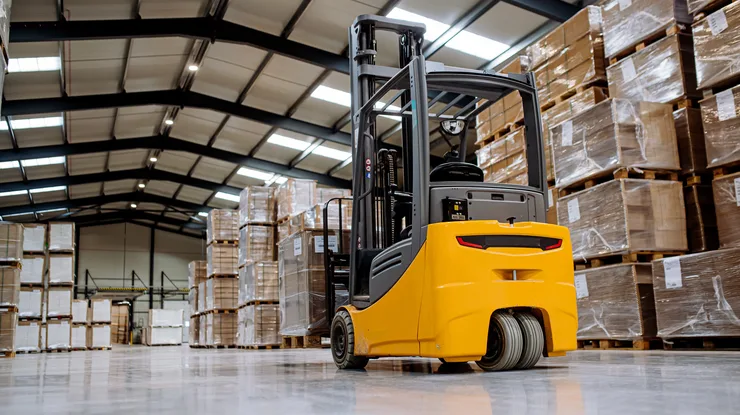
That is simpler than a full state plan and no less documentary. Operator qualification files, evaluation dates and refresher records are the first request after a lift injury appears in a loss run, and they sit across workers compensation and the liability layer at once. The Illinois forklift page covers which employers fall where.
Below every layer: the schedule, which no jurisdiction issues
None of the four layers produces the document that actually prices the policy. The machine schedule is yours alone — serial numbers, model years, insured values and a valuation basis per unit — and it is the only document in this whole structure that no authority checks for you.
That autonomy cuts both ways after a theft. A compact loader carries no certificate of title, so ownership rests on the bill of sale, the serial number and any financing record filed against the machine. No Illinois filing document is verified in this source set, so we say that plainly and link nothing; the sourced treatment sits in our guide to what drives skid steer insurance cost. Rented machines are the other schedule blind spot, and rented and leased equipment coverage is what answers a rental contract that runs from delivery through return.
The layer nobody legislates: the contract you signed
Four public layers govern an Illinois equipment contractor, and a fifth private one governs just as firmly. The project owner or the general contractor above you sets insurance requirements by contract, and those requirements routinely reach further than anything a municipality or the state imposes.
They tend to arrive as a certificate request with a list attached: minimum limits, additional insured status on a specified form, waiver of subrogation, primary and non-contributory wording, notice-of-cancellation terms. Some of that sits naturally on a general liability policy. Some of it does not sit naturally on an equipment floater at all, because a floater insures your machines rather than another party’s interest in a project, and the two forms are built to answer different questions.
The failure mode is predictable and it is a scheduling failure rather than a coverage one. A contract gets signed in February, the certificate request arrives the week before mobilization, and the endorsement needed to satisfy it takes longer to obtain than the crew has to wait. Reading the insurance exhibit at the same time as the scope — not at the same time as the mobilization — is the whole fix.
It is also an underwriting fact worth surfacing. A contractor routinely working under demanding owner requirements is describing a class of project, and that description tells a market more about the account than any registration in the four public layers above.
Answering all four layers at renewal
A clean Illinois renewal answers each layer in its own terms: registrations current where you actually worked, locate tickets and responses documented, machines correctly assigned between the equipment and auto policies, permit files where the acreage required them, operator records under the federal standard, and a schedule that matches the yard.
Answer each layer in the vocabulary that layer uses and the submission stops needing translation, which is most of what makes an account easy to place. Send a current machine list through the quote form and we will read it against that structure rather than against a rate table. Contractors comparing neighboring markets may find our Ohio cost guide a useful contrast — a state with the same absent general license and a very different dig-notice design.