
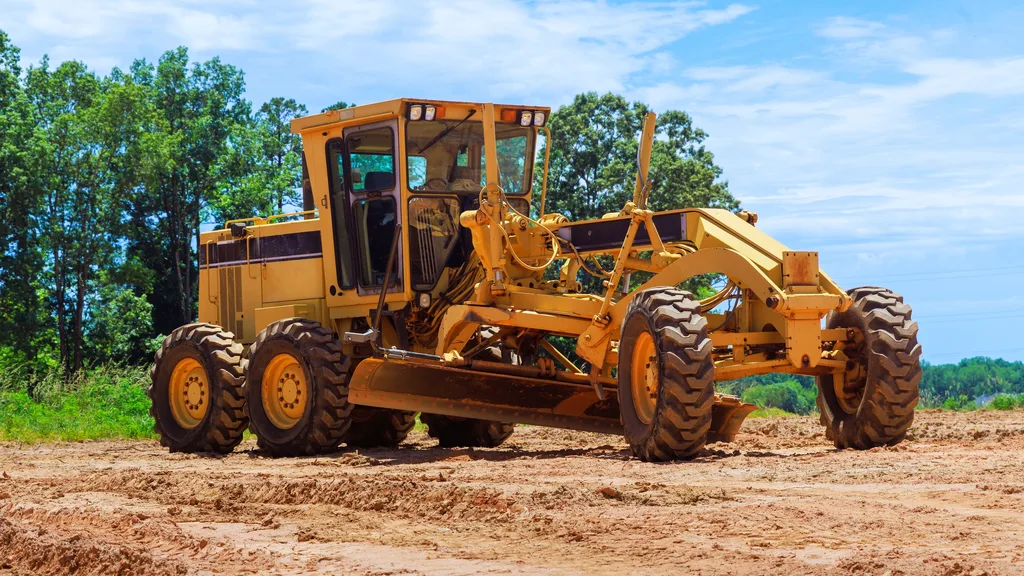

An Iowa equipment schedule is a snapshot, and the fleet it describes changes character four times a year. Machines that sit in one yard through February are dispersed across three counties in July. Reading the exposure through the working year explains most of what an underwriter is asking, and when to answer it.
The working year and the policy year rarely line up
A policy runs twelve months from whatever date it was first bound. The work runs on the weather, and in Iowa that is a compressed season with a long shoulder on either side.
Those two calendars almost never agree, and the mismatch is where most schedule problems are born. A renewal that lands in February is describing a fleet in winter configuration; the same fleet in June is a different risk in a different set of places. None of this is a defect in the policy — it is simply that a single annual snapshot is being asked to describe something that moves. The Iowa location page covers the state layer underneath it.
Winter: value concentrated in one place
From December through March most Iowa fleets come home. The yard fills, machines sit close together, and a year’s worth of value ends up behind one gate.
Concentration is a distinct exposure from dispersal, and it is not automatically worse — a secured yard beats a strung-out set of open sites for most loss causes. But it changes the shape of a bad outcome. One fire, one flood, one determined overnight visit reaches far more of the fleet than it could in July, and the equipment floater limits that felt generous against a single machine start to look different against the whole yard.
Winter is also when compact machines are most portable and least watched. Iowa gives us no cleared document on the ownership mechanics behind a stolen loader — there is no title, and proof runs through purchase records, the serial number on the schedule and any financing filing — so we state that here without a link and point instead at the sourced version in what drives skid steer insurance cost.
Spring: the ground opens and stays open
The thaw is the year’s first real change of state. Ground that was frozen and stable becomes soft, and the first earthmoving of the season happens on the worst surface it will see all year.
It is also when the acre line starts to matter. The state natural resources department administers a construction stormwater general permit for land disturbance of one acre or more. In a state with a short building season, permitted sites tend to open in spring and stay open, which means the machines assigned to them are committed for months rather than weeks. Committed iron is stationary iron, and stationary iron on soft ground is a different underwriting picture from a machine that moves twice a week. The Iowa dozer page works through the permit.
The dig season and a forty-eight-hour clock
Iowa’s one-call obligation is written as a period rather than a count of days. Under Iowa Code § 480.4, notice covers a planned excavation occurring after a forty-eight-hour period, with Saturdays, Sundays and legal holidays excluded from the count, and the facility operator owes its locating and marking response inside that same period.
The statute also does something useful that most do not: it defines the horizontal location of a facility as a band eighteen inches on either side. That is a specific promise about what a mark means, and it tells a crew where careful hand work begins. Everything that follows a strike — the outage, the operator’s repair claim, the disruption to whoever was relying on the line — lands on general liability rather than on the machine. Our Iowa excavator page carries the mechanics in detail.
Summer: the fleet comes apart
Peak season disperses everything. Machines are at four sites in three counties, moves happen weekly, and a share of the fleet is on a trailer at any given hour.
Self-propelled construction machinery is excluded from Iowa’s motor-vehicle definitions as special mobile equipment, which is why a backhoe carries no plate. We hold no cleared source for that definition, so it is stated qualitatively here and left unlinked; the Iowa backhoe page is where road operation is worked through properly. The seam contractors underestimate is the trailer itself: commercial auto answers for the truck, while the machine riding behind it — and during loading and unloading, where a real share of damage occurs — belongs to transit and trailer transport.
The crew, which has no season
Operator exposure is the one line item that does not move with the calendar, and it is the one contractors most often revisit only after something happens.
Iowa runs its own approved state plan covering private-sector employers, so powered-industrial-truck operator training and evaluation are enforced through the state program rather than through federal OSHA directly. A local inspecting authority means the operator qualification file gets examined more often, and it is the same file an underwriter asks for when an injury shows up in a loss run. That exposure sits across workers compensation and the liability layer together, and the Iowa forklift page sets out the standard.
Registration, not an examination
Iowa does not test competency for a statewide general-contractor license. What it requires is registration with the state labor division, backed by a bond, once a business earns more than a threshold amount from construction work in a year — a filing obligation rather than a qualifying exam.
We hold no cleared document for that requirement and are not going to link one, and we are deliberately not printing the threshold figure either: a number we cannot source is a number we should not publish, and quoting it while explaining why we cannot source it would be the same mistake with better manners. Check the current requirement with the state before assuming where you sit. For an equipment underwriter the consequence is straightforward — with no competency credential to read, the weight shifts onto operating history, the schedule and the loss runs.
Fall: the reconciliation nobody puts on the calendar
The best month to fix a schedule is the one nobody uses for it. In October the yard is full, the year is fresh in memory, and every machine that came or went is still traceable.
Real-World Scenario: A contractor sells an aging loader in July to a neighbor two towns over and buys a replacement in August, taking delivery in the middle of a job. Both machines are on the same yard for a week. At renewal the following spring, the schedule still lists the machine that left and has never listed the one that arrived, and nobody in the office can now say with certainty which week the handover happened. The gap was created in a good year, by a business doing well.
What makes the fall version of this exercise better than the renewal version is memory. In October somebody in the office can still name the week a machine changed hands and find the invoice without searching. By February that has become a reconstruction, and reconstructions get rounded. The same is true of attachments, which move between machines and between crews all season and are the items most often missing from a list entirely — a breaker or a mulching head bought in June is exactly the sort of purchase that never gets reported because it was not a machine.
Most floaters carry a newly acquired provision that picks up a purchase for a limited window, so a machine is rarely uninsured outright. The provision does not fix a stale list, though, and a stale list undermines every other answer on the application. The Iowa location page links the type-level detail if you want to reconcile machine by machine.
Where the two calendars can be made to meet
You cannot move the season and you generally do not want to move the renewal date. What you can move is when the schedule gets its honest annual look — and putting that in the fall, well ahead of a spring renewal, is the single most useful scheduling decision available to an Iowa contractor.
Send the reconciled list through the quote form when you have it. For a state where the same calendar problem is compressed into a storm season instead of a thaw, our Mississippi cost guide is a useful comparison.