
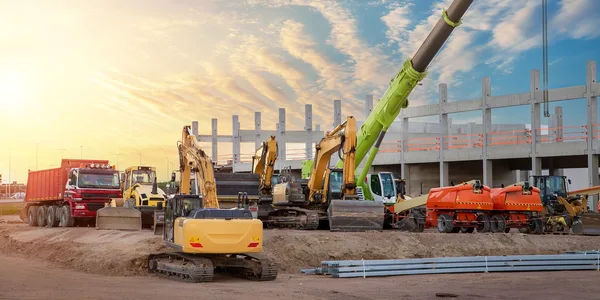

Utah equipment insurance is priced against the job, not the machine. A loader that spends Monday on a valley subdivision, Wednesday on a bench cut above it and Friday inside a distribution building has occupied three exposure profiles in one week, and the schedule that describes where it truly works is what an underwriter is reading.
Before any of it: the license Utah does ask for
Most states in the region either license nothing statewide or register contractors by project size. Utah does neither. Its construction trades licensing act runs a competency system through the state professional licensing division — general building and general engineering classifications alongside specialty categories, with coursework and examination behind them. The requirement sits in the Utah Construction Trades Licensing Act.
That matters to an underwriter for an unusual reason: it is one of the few credentials in the region that carries real information. Where a license is a registration, it says only that a form was filed. Where it is a competency credential, it says something about the operation behind the machines, and the file leans on it a little more and on inference a little less. The Utah location page sets the classifications out.
The valley subdivision
The archetype most Utah contractors price around is a residential or light-commercial pad in the Salt Lake City, West Valley City, Provo, Orem or Lehi corridor. Access is good, hauls are short, and machines cycle between jobs several times a week.
Two things follow. First, transitions dominate the loss picture: loading, unloading and short moves produce a share of equipment damage out of proportion to the minutes they take. Second, machines sleep at more different addresses in a month than an owner realizes, and the storage answer on the application drifts away from the practice.
Pad work also produces the least memorable losses, which is exactly why it dominates the frequency column. A cracked screen, a bent cylinder rod, a bucket edge caught on a curb, a windshield taken out by a swinging gate — individually forgettable, collectively a pattern an underwriter reads as working practice rather than as bad luck. Owners who absorb small damage rather than reporting it are not gaming anything; they are simply removing from the record the one thing that would have explained the year.
The equipment floater responds wherever the machine is, which is precisely why the description of where it is matters. We write the floater as a standalone policy rather than folding it into a package, so a change in the working pattern is a change to one document.
The bench and canyon job
Move the same crew onto a bench cut or a canyon road widening and almost every operating fact changes. Access narrows, machines walk further under their own power, more of the shift is spent working on grade, and a machine that gets into trouble is slower and more expensive to recover.
None of that is scenery, and underwriters do not ask about elevation. They ask about site types and operating radius, which is the same question in a form that can be rated. A contractor who answers precisely — this share of the work is grade work on constrained access, that share is flat pad work — gets a better read than one who describes an average that matches neither job.
Recovery is the part owners underestimate. On a valley pad, a machine that will not move is an inconvenience and a low-bed truck away from being fixed. On a constrained cut with a single access road, the same machine can hold a crew, a delivery schedule and a lane closure hostage while the recovery is arranged, and the downtime is frequently worth more than the repair. Underwriters do not price that directly, but it arrives in the loss run as severity nobody planned for.
Grade work is also where slope, load and visibility injuries concentrate, which puts workers compensation and the liability layer in the file together rather than separately.
The high-desert utility corridor
Corridor work introduces the exposure with the longest tail. Utah’s notice regime under Utah Code § 54-8a-4 requires notice not less than forty-eight hours and not more than fourteen days before excavation begins, notice to the statewide association counts as notice to each operator, and an excavator may begin once facilities are marked or once forty-eight hours have passed with no operator response.
The far edge is the one that catches crews. A ticket taken out well ahead of a phase that slips is a document that expired quietly while the machines were elsewhere. A strike is an outage, an emergency repair and a third-party claim long before it is an equipment claim, so it lands on general liability rather than on the floater. The Utah excavator page works the sequence through.
Real-World Scenario: A contractor runs three crews in one week — a valley pad, a canyon-side widening, and a fit-out inside a distribution building. The forklift working the fit-out has been in that building for two seasons, and everyone on the account thinks of it as part of the building rather than as part of the fleet. It is not on the schedule. When a load shifts against a storage bay and a helper is hurt, the file needs an operator evaluation record and a machine description for equipment the policy has never named, and the account spends a week assembling from invoices what one schedule line would have said.
Indoor work, and a different rulebook for the same crew
Interior material handling is the archetype most often left out of an equipment conversation, and Utah gives it a distinct legal footing. The state operates its own approved state plan covering private-sector employers, as the federal agency’s list of state plans records, so powered-industrial-truck operator training, evaluation and enforcement run through the state program rather than through federal OSHA directly.
The substance of the requirement is not lighter. What changes is who inspects, whose citation history follows the account, and which program the records have to satisfy. Those records are the underwriting document either way, and the Utah forklift page sets the standard out.
What travels between all four
Between archetypes, the iron moves — and Utah draws that boundary more cleanly than most states. Utah Code § 41-1a-102 defines special mobile equipment expressly as off-road motorized construction equipment not designed primarily to transport persons or property or to operate in traffic, and only incidentally moved over highways. The category is named rather than inferred.
So the machine belongs on the equipment schedule; the truck and trailer that move it belong on commercial auto; and the machine while it is chained down, loaded or unloaded belongs to transit and trailer transport. The Utah backhoe page covers the road-operation side.
Ownership proof travels too, and Utah has no separately cleared document we point at for it, so we describe it rather than cite it: construction equipment carries no certificate of title, and after a theft the bill of sale, the serial number and any financing statement filed against the machine are what stand in for one. The skid steer cost guide carries the sourced version of that mechanic, and the Utah skid steer page applies it to the state.
Water, and the job that has to plan for it
Utah administers its own construction stormwater permit through the state water quality division, described on its construction stormwater permits page, triggered at a disturbance of an acre or more, including a site that forms part of a larger common plan reaching that figure.
The common-plan language is the part worth reading twice, because it catches phased subdivision work that feels small one lot at a time. As with every state, this is compliance rather than rating — but sites past the threshold run longer, hold more machines standing between phases, and leave graded ground open to weather. Duration and accumulation are real drivers, and the Utah dozer page works through the permit structure.
Pricing what changes rather than what stays the same
The machines on a Utah schedule barely differ from the machines on a schedule two states away. What differs is the mix of jobs those machines rotate through, and the mix is what an underwriter is actually buying.
So the useful preparation is not shopping. It is describing the mix honestly, keeping the storage answer current as it moves between archetypes, and making sure the rented machines that fill peak gaps are covered — a rental contract normally makes you responsible from delivery through return, and only rented and leased equipment coverage answers for that, at a limit set against the largest unit you might take. Send the current list through the quote form and we will read it against the jobs it actually runs.