

The cleanest way to understand what an equipment policy costs in Massachusetts is to follow a single job. Take one site-development contract from the bid through mobilization, the dig, the work itself and the load-out, and every meaningful driver shows up in the order the crew meets it rather than the order an application asks about it.
The bid: which credential the work requires
Massachusetts does not run one contractor credential; it runs two, on different tracks. A Construction Supervisor License governs the supervision of structural construction, and a separate Home Improvement Contractor registration governs work on one-to-four family homes. The construction supervisor licensing rules describe the first, and the two are administered by different offices with different scopes.
This matters at bid time rather than at binding. A contractor whose year mixes commercial site work with residential additions needs both answers settled before quoting, because the credential question is decided by the character of the job and not by the size of the machine that shows up. Underwriters do not price the credential itself. They do notice when a contractor cannot describe which track a given job falls under, because that uncertainty tends to travel with other kinds of uncertainty.
Mobilization: what arrives, and the list it came from
The machines that roll onto the site are the ones an equipment floater has to name. An equipment schedule lists each unit by serial number, year, make and insured value, and that document is what is actually priced — everything else in a submission is commentary on it.
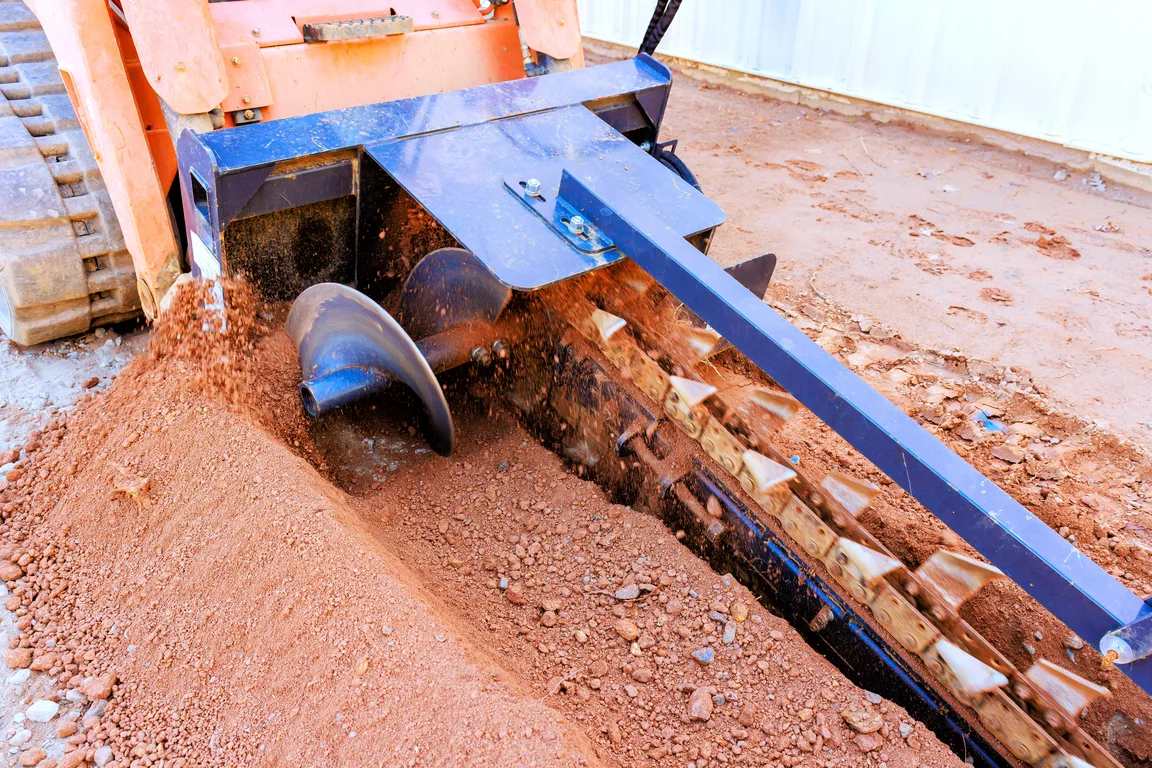
Two decisions live on that list. The first is value basis: a machine settled on an actual-cash-value footing is settled net of depreciation, while one written on a stated or agreed basis is settled against the figure fixed at binding. The second is attachments, which is where schedules quietly go wrong. Buckets, breakers, augers and forks travel between machines and between crews, and a list carrying carriers alone understates what showed up.
Neither decision belongs to the renewal cycle. Both are made once, at binding, and then carried forward for years by whoever assembles the packet — which is how a schedule that was accurate in a contractor’s third year becomes an argument in the eighth. An eight-year-old loader and a machine delivered last spring do not want the same settlement basis, and a list that applies one basis to everything is describing a filing habit rather than a fleet.
Mobilization is also where rented iron enters, since a Boston-area job with a compressed schedule rarely runs entirely on owned equipment. A rental contract normally makes you responsible from delivery to return — damage, theft, and frequently loss-of-use charges — and an owned schedule answers for none of that. Rented and leased equipment coverage is the part that does.
Before the shovel: premark first, then notify
Massachusetts orders the dig sequence in a way that trips contractors who learned the routine elsewhere. Under M.G.L. c.82 § 40A, the excavator premarks the proposed excavation before giving initial notice to the notification system, and the premarked stretch is bounded in length rather than open-ended. Notice itself must be given at least seventy-two hours before excavation, excluding Saturdays, Sundays and legal holidays, and not more than thirty days before it.
Both halves fail in different ways. Skip the premark and locators mark an area nobody defined, so a properly filed ticket still produces paint in the wrong place. Pull the ticket at award and let the start date slip, and the notice ages out of its own upper bound before the machine arrives.
A strike is a liability loss first — service interruption, third-party repair, sometimes an outage that stops other trades — and machine damage is the smaller half. That is why the general liability layer and the schedule are read together. The Massachusetts excavator page works through the notice sequence.
The work: who is standing near the machine
Once the job is running, the exposure shifts from the machine to the people around it. Massachusetts operates an approved State Plan that covers only state and local government employees, so a private equipment contractor here answers to the federal powered-industrial-truck standard directly.
The record is the asset. Operator qualification files, evaluation dates and refresher documentation are what gets requested after a lift-related injury and what a defense rests on afterwards, and a crew that trains well but writes nothing down looks identical on paper to one that does neither. That exposure runs through workers compensation and the liability layer at once, and the Massachusetts forklift page sets out the standard.
Open ground: a permit issued from a federal desk
On a job that disturbs an acre or more, stormwater obligations attach — and Massachusetts routes them unusually. The state is non-delegated for this program, so the construction general permit is issued federally rather than by a state environmental office.
That changes the filing path, not the underwriting picture. What an underwriter reads from a job of that size is duration and accumulation: longer schedules, more machines standing idle between phases, graded ground exposed to New England weather for months. The Massachusetts dozer page covers the permit structure.
Demobilization: the most expensive twenty minutes
Equipment damage clusters at the two ends of a job, and the end is worse than the beginning because everyone is tired and the trailer is the last thing between the crew and going home.
Real-World Scenario: A crew finishes a utility relocation outside Worcester on a Friday afternoon and loads out in the last hour of the shift. The excavator is walked onto the trailer by an operator who has run it competently for three weeks and chained down by a laborer who has never done it before, because the usual driver is on another job. The load shifts on a highway ramp forty minutes later. Nobody is hurt, the machine is repairable, and the contractor discovers that the question of which policy answers for a machine in motion had never actually been settled — only assumed.
Transit and trailer transport is the coverage part for the machine in motion; commercial auto answers for the truck and trailer themselves. Assuming that the auto policy follows the load is describing a gap rather than a coverage.
Massachusetts treats self-propelled construction equipment as special mobile equipment not registered as an ordinary vehicle when it is only incidentally on public roads. That is the general position rather than a statutory citation this guide can point you to, and the Massachusetts backhoe page carries the road-operation detail.
Closeout: the records the job leaves behind
When the site is demobilized, what remains is paper: the ticket file, the training records, the rental returns, the purchase invoices for anything bought mid-job, and an updated machine list if anyone remembered.
That last item is the one that decays. A machine sold at the end of a season stays on the list; an attachment bought in the middle of one never reaches it. Neither error is deliberate and both are visible at the worst moment, because a schedule is read most carefully on the day a claim is filed. The contractors whose renewals move least are the ones who treat closeout as the point where the list gets reconciled, rather than treating the renewal packet as the annual opportunity to remember.
Ownership proof belongs in that pile too, and it is not the paperwork most contractors expect. Construction equipment is untitled, so after a theft the proof rests on the bill of sale, the serial number and any financing statement filed against the machine. There is no cleared state document to link here, and this guide will not invent one — our skid steer cost guide carries the sourced treatment of how that filing works.
What one job teaches the renewal
Run that sequence a dozen times and you have a year. Loss frequency dominates what comes back at renewal, and frequency is built out of small end-of-shift events rather than dramatic ones. Schedule accuracy is next, because a list that no longer matches the yard undermines every other answer. Then radius, then controls.
What does not move it much is the age of the fleet or the make of any single machine. A well-kept older unit with a service history behind it is a more predictable risk than a newer one run hard across three crews with nothing written down, and an underwriter reading a Massachusetts submission is looking for that difference rather than for a model year.
Send a current machine and attachment list through the quote form and we will read it against the stages above. The Massachusetts location page is the starting point for contractors comparing across state lines.