

Nobody prices a Missouri equipment schedule off a phone call. A submission is a stack of documents, and each one answers a different question about how the iron is run, stored and hauled. What a contractor ends up paying is largely a function of how completely that stack was assembled before anyone read it.
Document one: the machine list
The machine list is the only page in the packet an underwriter cannot work around. Serial number, year, make, insured value and a settlement basis for each unit — that is the whole form, and most of the number is decided on it.
Two firms outside Springfield with the same crew size and the same annual receipts can land far apart because one list was rebuilt this spring and the other has been copied forward since a trade three seasons ago. Values drift. Units get sold. Attachments arrive steadily and never reach the page, which means the carrier machine is listed and the tool that does the work is not.
Settlement basis is the decision most often skipped. Actual cash value settles net of depreciation; an agreed or replacement basis settles against the figure recorded at binding. Neither suits a whole yard — a machine delivered last season and one running its ninth year want different treatment — and the choice belongs on each line rather than defaulted across the fleet. That decision lives inside the equipment floater, which we write on its own rather than folding into a package.
Document two: the loss runs, and the story nobody attaches
Loss runs arrive as bare entries with no explanation, and the explanation is what changes the reading. The same two claims can describe a yard with a supervision problem or one bad winter on a single job that has since finished. An underwriter who is given only the entries will assume the first.
Contractors rarely think to write the second version down, and it costs them. A short note against each entry — what happened, what changed afterward, whether the crew or the site is still in the mix — is the cheapest document in the packet and the one that most often changes a renewal conversation from arithmetic into judgment.
Two related habits pay for themselves. Order the runs early rather than in the week the renewal falls due, because a late run forces the whole submission into a hurried reading. And watch the open reserves. A file left open with a heavy reserve years after it was practically finished sits on the record as though it were still live, and asking for a stale reserve to be reviewed is dull work that quietly improves how a five-year history reads.
Document three: the locate ticket
Missouri sets both ends of its dig window, which is unusual and worth knowing exactly. Under Mo. Rev. Stat. § 319.026, an excavator must give notice at least two working days before the expected date of commencing excavation, and not more than ten working days before it. Missouri 811 runs the notification.
The consequence is that a slipped start date, not a forgotten call, is what usually puts a crew outside the law. A ticket pulled against an original schedule ages out when the job moves, and the crew that arrives on the strength of it is digging unnotified. Ticket discipline is therefore a scheduling habit rather than a safety poster, and it sits directly under the general liability layer — a utility strike is mostly a third-party loss, not a machine loss. The Missouri excavator page works the notice mechanics through in detail.
The record matters as much as the call. A ticket number logged against the job, the date it was pulled, and a line added whenever a phase moves are three entries in a job file that later decide whether a strike is defensible at all. Firms that keep them close the question in a morning. Firms relying on memory spend the first weeks of a claim reconstructing a fortnight nobody wrote down, and the reconstruction is worth less than the record would have been.
Document four: the registration that does not apply
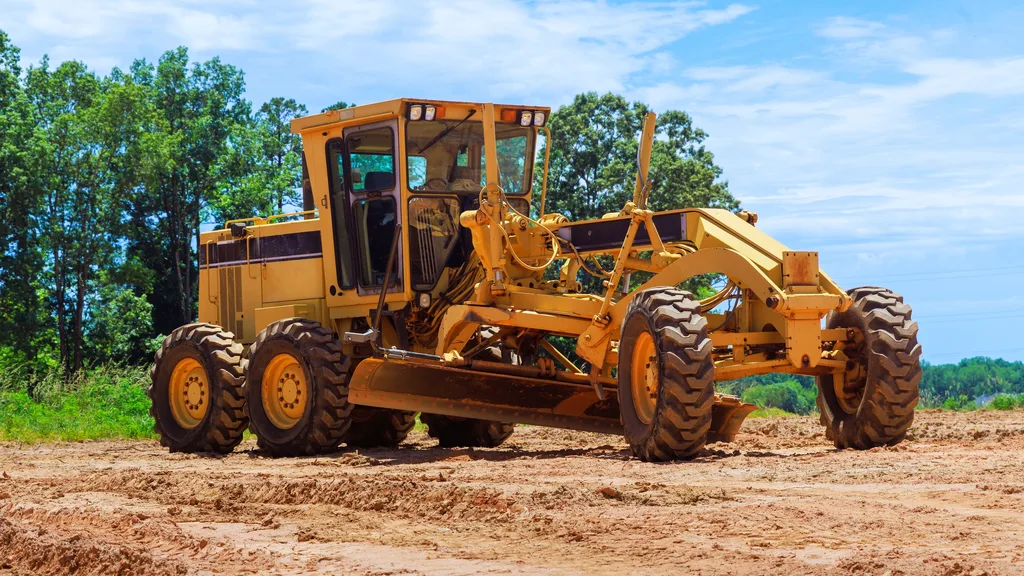
Mo. Rev. Stat. § 301.010 defines special mobile equipment as machinery not designed or used primarily to transport persons or property and only incidentally moved over highways, and names road construction and maintenance machinery, ditch-digging apparatus, power shovels, cranes, graders and rollers among the examples.
That definition draws a policy boundary rather than a licensing one. The machine sits on the equipment schedule. The truck and trailer that move it sit on commercial auto. The stretch between the two — loaded, chained, hauled and unloaded — belongs to transit and trailer transport, which is where a surprising share of damage actually happens. Our Missouri backhoe page covers the road-operation side of the same classification.
Document five: the operator file
Missouri sits under federal OSHA for private-sector employers, so the powered-industrial-truck training and evaluation requirements apply as written with no state program layered over them.
The document, not the rule, is what gets priced. Qualification records, evaluation dates and refresher entries are what an underwriter asks for after a lift-related injury appears in a loss run, and they are what a defense is built on later. A crew trained carefully by a supervisor who writes nothing down is indistinguishable on paper from a crew never trained at all. That file reaches both workers compensation and the liability layer, and the Missouri forklift page sets the standard out in full.
Document six: the land-disturbance permit
Missouri’s Department of Natural Resources administers construction and land-disturbance stormwater permitting through its electronic permitting system, and coverage is required once disturbance reaches one acre or more.
This is an environmental filing and never appears on a rating worksheet, which is exactly why it is useful to an underwriter. Its presence tells them the shape of the work: sites large enough to hold several machines between phases, longer durations, graded ground standing open through weather. Those are accumulation facts, and accumulation is the quiet driver on any dozer-heavy list. The Missouri dozer page walks through the permitting structure.
Document seven: the rental contract still in the truck
Rental paperwork is the document least likely to reach a broker and most likely to matter. It is signed at a counter, folded into a cab and forgotten, and it usually transfers responsibility for the machine from delivery to return — damage, theft, and often loss-of-use charges while the unit is out of service.
Real-World Scenario: A grading contractor near Columbia owns three machines and takes a fourth on a monthly rental every summer when two jobs overlap. The rented unit is the one the crew knows least well, and it is the one that gets hurt backing off a trailer on an awkward approach. The owned-equipment schedule is immaculate and answers for none of it, and the rental desk’s invoice includes the days the machine spends waiting for parts.
Rented and leased equipment coverage is the answer, and the limit belongs at the size of the biggest unit a busy month might bring in rather than the one that comes most weeks.
Two documents Missouri never issues
The first is a statewide general contractor license. Missouri licenses particular trades at the state level and leaves general contracting entirely to local jurisdictions, so the requirement in Kansas City is not the requirement in St. Louis, Springfield, Columbia or Jefferson City. There is no single credential to place in front of an underwriter, and no cleared statewide document to point at, so the questions land on operating history and controls instead.
The second is a certificate of title for a compact loader. Construction equipment is not titled the way a truck is, which means ownership after a theft is proved from purchase records, the serial number and any financing filing rather than from a state record. We keep the sourced version of those mechanics in the guide on what drives skid steer insurance cost rather than restating them here.
What a thin packet actually costs
An incomplete submission does not get declined. It gets priced conservatively, because every gap has to be filled with an assumption and assumptions are not generous. That is the whole mechanism, and it is why document discipline outperforms market shopping in this state.
Timing belongs in the same sentence. A packet assembled during the week before expiry is read under pressure by whoever happens to be free, while one that arrives with room to spare is read by somebody with time to ask a clarifying question instead of resolving an ambiguity against the applicant. The same documents, sent a month earlier, are effectively a different submission.
None of this requires a new system. Most Missouri contractors already hold every document described above somewhere — in a cab, a filing drawer, a rental account or an email thread — and the work is assembling them once and then keeping the assembly current. The firms that do it stop noticing renewals, which is the outcome worth aiming at.
Send the machine and attachment list through the quote form and we will read it against the exposures above; an umbrella layer over the primary limits is usually a shorter conversation than contractors expect. The Missouri location page is the place to start if you are comparing across state lines.